I thought I had mouse-proofed my home until a pest expert revealed these surprising entry points I had overlooked — and you probably have, too
Latest from Tom's Guide ·
null
I can usually cope well with most common household pests ( spiders are a breeze) — but I absolutely draw the line at mice or any other rodent. And since the colder weather marks the onset of 'peak rodent season', I've made a point of mouse-proofing my home and gathering all the essential supplies to keep mice away .
Not only are these rodents notoriously hard to get rid of, but they can cause severe damage to your building's structure and property.
Yet in my bid to remove the obvious things that attract rats and mice to your home , it turns out I had completely missed several unexpected entry points.
According to pest experts, these particular entry points frequently go unnoticed — so let my surprise serve as your lesson: here's what you need to look for.
While I typically focus my mouse-proofing efforts on inspecting baseboards and ground-level entryways, I don’t ever think to look up. However, the roof is one of the most overlooked and surprising access points where mice can enter your home.
“The roofline is probably the most underestimated entry point,” states Ed Dolshun, Vice President of Business Development and Technical Director at Catchmaster .
“Homeowners instinctively look at ground level, but mice climb — walls, utility wires, tree branches — and enter from above. Roof rats are commonly found along piping, fences, and shrubbery, working their way up rather than in from the ground”.
To prevent rats from entering through your exterior walls or roof, you need to seal off gaps with steel mesh or hardware cloth combined with sealant to block any holes.
What’s more, to keep mice from scaling your walls, make climbing as difficult as possible by trimming back high shrubs, overgrown tree branches, and other nearby vegetation.
Another forgotten place we often overlook is the small gaps under garage doors and sheds. “A gap as small as a quarter inch along the bottom seal is enough for a mouse to squeeze through,” says Dolshun. “Most people assume their garage door closes tight, though many don't”.
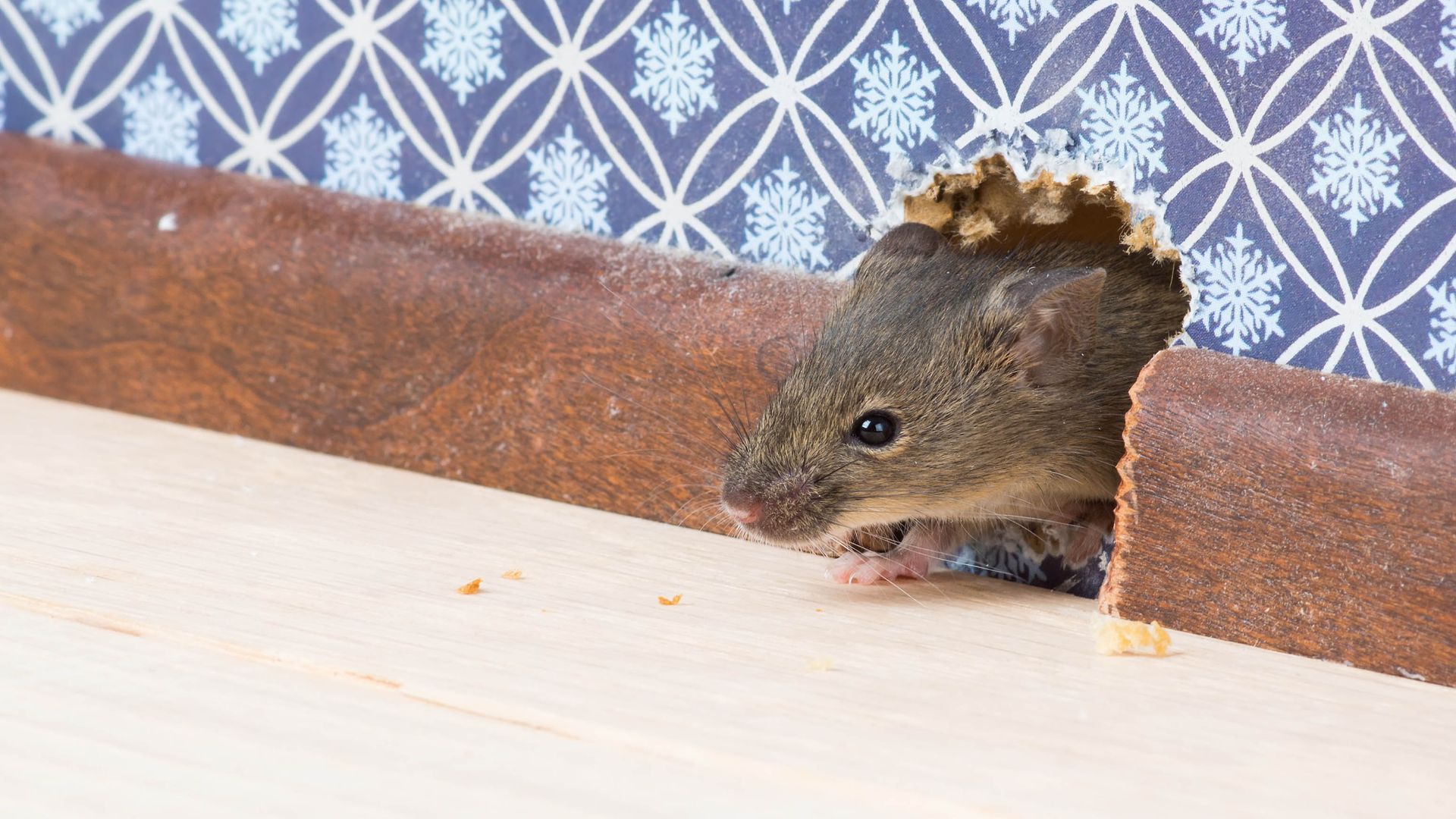
So how small could the gap be for a mouse to sneak its way in? “This is the detail that tends to surprise people most: a mouse needs a gap roughly the size of a dime to get in, and a rat needs only a quarter-sized opening,” adds Dolshun.
A mouse needs a gap roughly the size of a dime to get in, and a rat needs only a quarter-sized opening.
Ed Dolshun, Vice President of Business Development and Technical Director at Catchmaster
“And critically, if a rodent can fit its head through an opening, it can work the rest of its body through. That should change how you think about inspecting your home because you're not looking for obvious holes, but rather anything that small.”
Similarly, seal gaps and cracks around doors and windows with caulk or mesh wool.
Also, ensure that leaf piles and plant debris are regularly raked clear from entryways. Allowing these to accumulate creates an inviting, warm shelter where rodents can easily hide and dwell during the colder months.
So if you want to make your home completely mouse-proof, don’t miss these common overlooked areas — or else you may have to call in the pest experts in the long run.
Humane Mouse Trap 4 pack: $24 Catch mice in your home with this 4-pack of humane 'catch and release' traps. Designed to catch mice without harming them for them to be released back into the wild. These pet-friendly traps are easy to clean, contain a removable bait case and are reusable. View Deal