Recreating an Antique Hit-and-Miss Engine With Lego Is One Way to Kill Time
The Drive ·
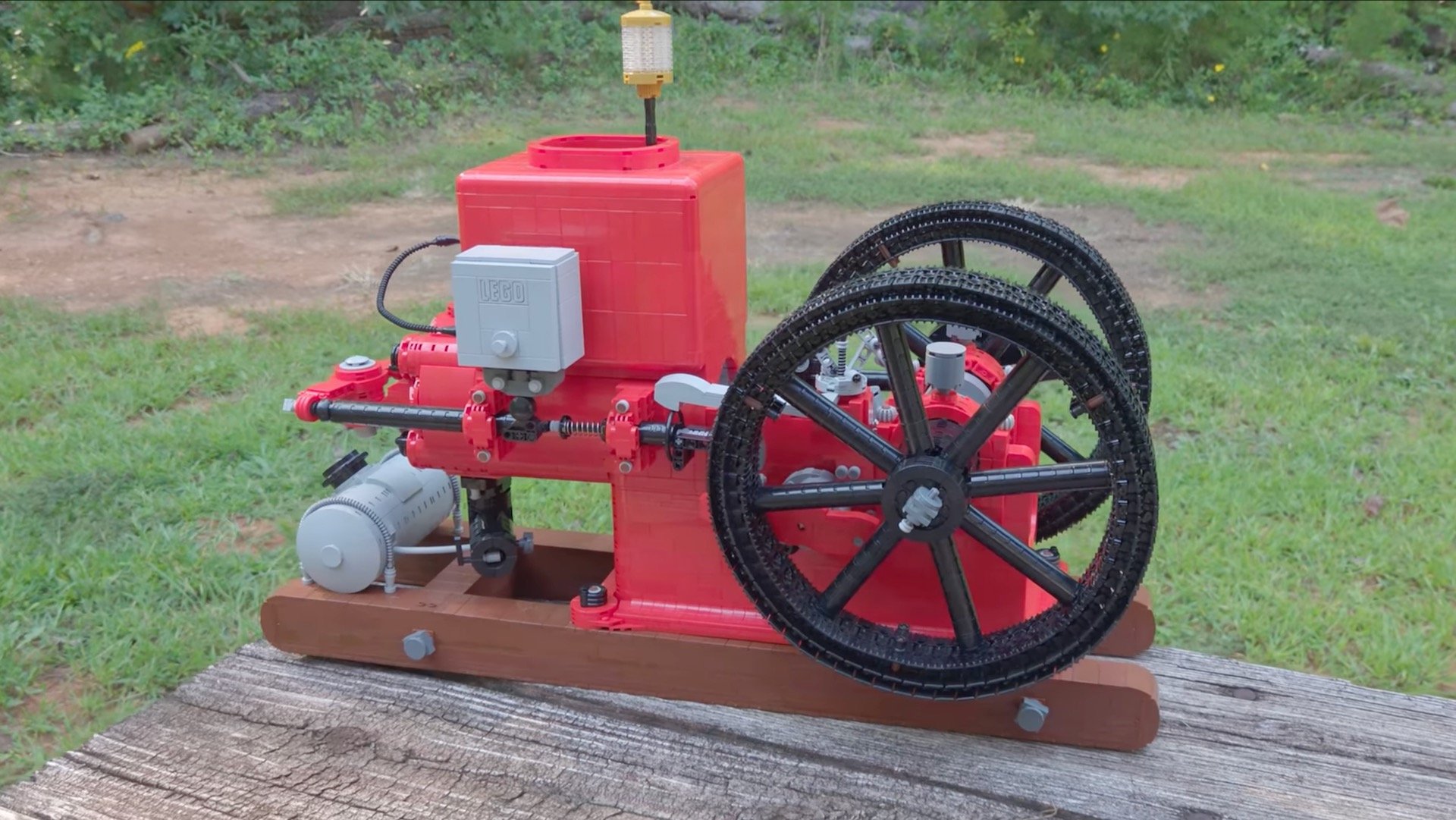
Building a working replica of a defunct engine design with plastic bricks required some creative engineering solutions. The post Recreating an Antique Hit-and-Miss Engine With Lego Is One Way to Kill Time appeared first on The Drive .
One of the many cool things about Lego is that you don’t have to follow the instructions. Lego pieces are so versatile that you can build pretty much anything out of them. An interesting niche of the freestyle Lego scene is building working engines out of the plastic bricks. Instead of one of the more obvious choices , this builder chose to resurrect an evolutionary dead end of internal combustion.
YouTuber Delton Adams built a working “ hit-and-miss ” engine, using vacuum power instead of combustion to get it to spin. If you haven’t heard of a hit-and-miss engine, that’s because they haven’t been in common use since the 1930s. The name comes from the way these engines only get ignition (“hit”) while running at a certain speed, otherwise they cycle without ignition (“miss”) using a governor mechanism to hold the exhaust valve open. They were briefly popular, mainly as stationary power sources, in the early part of the 20th century.
As Adams explains in the video, the hit-and-miss engine he modeled is a four-stroke (two-stroke versions also existed), but Lego vacuum operation is a two-stroke cycle. Air is simply pumped in and pulled out, so trying to replicate the four-stroke cycle of a real-life hit-and-miss engine would suck the piston out of position when the engine was under vacuum. Here, instead of holding the exhaust valve open, the camshaft is moved out of the way.
To reconcile these two things, and make the Lego engine more realistic, Adams swapped the camshaft and pushrod arrangement used in other Lego vacuum engines for an inverted cam and rocker, with a spring to operate the valve against vacuum pressure. The governor it’s connected to is a period-correct fly-ball mechanism, operated by centrifugal force.
Everything else needed for an operating engine is replicated in plastic. The crankshaft has friction-reducing roller bearings, the piston and connecting rod are held together with small wrist pins, and the cylinder head is attached with long studs like you’d find on the real thing.
The finished engine generates .12 watts of power, or approximately 1.5 “studpower.” That’s a measure of power output for Lego engines, and it’s… not a lot. But real hit-and-miss engines weren’t exactly towers of power either. That’s partly why they fell out of favor, but this faithful replica keeps their memory alive.
The post Recreating an Antique Hit-and-Miss Engine With Lego Is One Way to Kill Time appeared first on The Drive .