Lemelson-MIT brings invention education to classrooms from kindergarten to college
MIT News ·
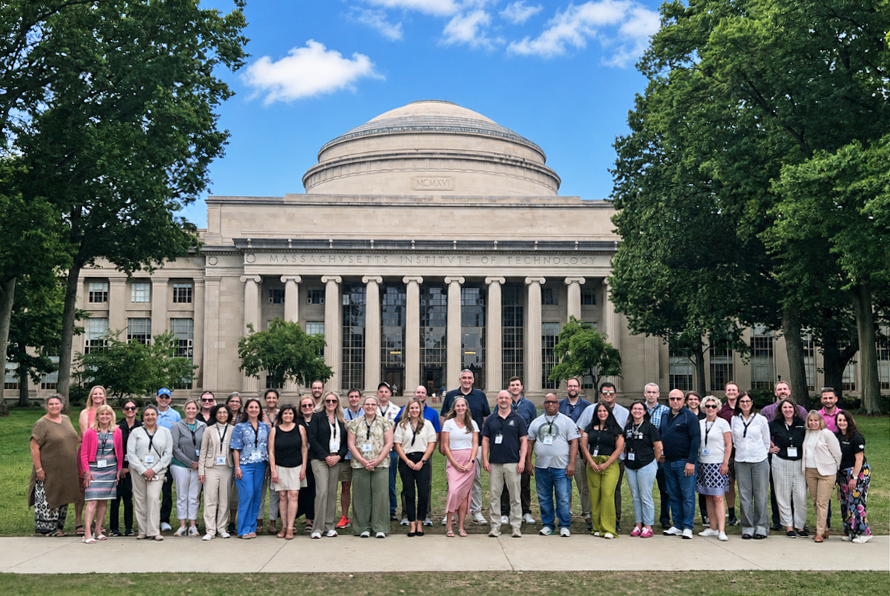
A new initiative in California, Tennessee, and New England puts learning by doing at the center of students’ STEM pathways, in step with MIT for America’s focus on helping students design, make, and innovate.
MIT was founded on the idea that people learn best by doing. For nearly 25 years, the Lemelson-MIT Program in the MIT School of Engineering has carried that idea into K–12 classrooms across the country, helping teachers guide students as they find real problems and invent solutions to them.
Now the program is expanding that work into connected pathways that follow students from the early grades through college.
This month, Lemelson-MIT awarded multiyear Invention Education Pathways grants and stipends to 19 schools, districts, and colleges across three regions: Northern California, Tennessee, and Massachusetts/Connecticut. The partners include elementary, middle, and high schools, as well as a community college and two state universities, together forming routes for students to experience invention at every stage of their education.
The initiative arrives as MIT President Sally Kornbluth has launched MIT for America , a strategic effort to widen access to quality STEM education nationwide, from kindergarten to community college. One of its three focus areas, Design, Make and Innovate, aims to give students more chances to build, test, and prototype their way toward solutions, and to support teachers in bringing hands-on work into their classrooms. Invention education does exactly that.
Learning the way inventors work
In invention education, students work in teams to identify problems that matter to them and their communities, then develop prototypes of original solutions. Along the way, they apply knowledge from multiple disciplines and develop both technical skills and durable human skills such as empathy, collaboration, and communication. They also gain confidence in their own abilities.
“Understanding user needs is critical in product design,” says Michael Cima, faculty director of the Lemelson-MIT Program and a professor of materials science and engineering. “It’s the foundation everything else is built on. Invention education builds that understanding early, teaching students to ask whom they’re designing for and what is truly needed before they ever build a prototype.”
Rather than offering a one-time project or an after-school club, the pathways approach aims to give students repeated, connected invention experiences as they advance. Lemelson-MIT staff will work alongside educators in each region to assess, design, and implement learning experiences that help students apply scientific, technical, engineering, and mathematics (STEM) knowledge to real-world problems. Schools and colleges can adopt Lemelson-MIT curriculum resources selectively to jump-start or strengthen their offerings.
“We have learned that invention education can benefit all students, especially when students can experience learning through the invention process across multiple grade levels,” says Stephanie Couch, executive director of the Lemelson-MIT Program. “Our goal is to create opportunities for learning through invention education during the regular school day, beginning in the early grades and continuing into adulthood.”
Every student an inventor
The three regions were chosen through a nationwide search for schools and districts committed to building strong invention pathways from kindergarten through college and to increasing the number of inventors from diverse backgrounds.
That commitment rests on a simple observation from Lemelson-MIT’s work: Given the chance to invent, students of every background surprise themselves, and their teachers, with what they can do. The program’s experience, case studies, and published research show that invention education helps students, especially those underrepresented in STEM, see themselves as capable STEM learners and inventors. Students in the program’s flagship high school initiative, InvenTeams, have earned 24 U.S. patents.
The benefits extend into the workforce. “Employers benefit from graduates that have the types of capabilities they need, but have trouble finding,” Couch says. “Invention education connects students’ knowledge and passions with the technical and durable human skills employers are looking for.”
Participating institutions
Looking ahead
Over the next three years, the Lemelson-MIT Program will work closely with educators in all three regions toward a shared goal: making invention education a regular part of the school day, rather than an occasional enrichment activity.
Lemelson-MIT hopes that what these partners learn together will help show how invention pathways can take root in schools and colleges across the country.