The Next Big Thing for High-Performance UTVs? Sports Car Engines
The Drive ·
Brace yourself for speedy off-roaders that have more in common with road cars than ever before. The post The Next Big Thing for High-Performance UTVs? Sports Car Engines appeared first on The Drive .
Side-by-sides aren’t what they used to be. Whereas early examples of the vehicular format included the Yamaha Rhino, Kawasaki Mule, and John Deere Gator, UTVs have evolved. Work models still exist, of course, but today’s performance models would’ve been unimaginable some 20 years ago. I’m convinced we’re already getting a glimpse of the segment’s next evolution, and that’s stepping up to full-blown car engines.
The KTM X-Bow Arrow is what prompted this take, with its Audi 2.0-liter turbo four-cylinder. It makes 280 horsepower in the lower state of tune, while the Arrow Black Limited Edition enjoys 330 hp. That’s insane! It almost feels like they broke some unwritten rule when most other machines out there make do with half the displacement.
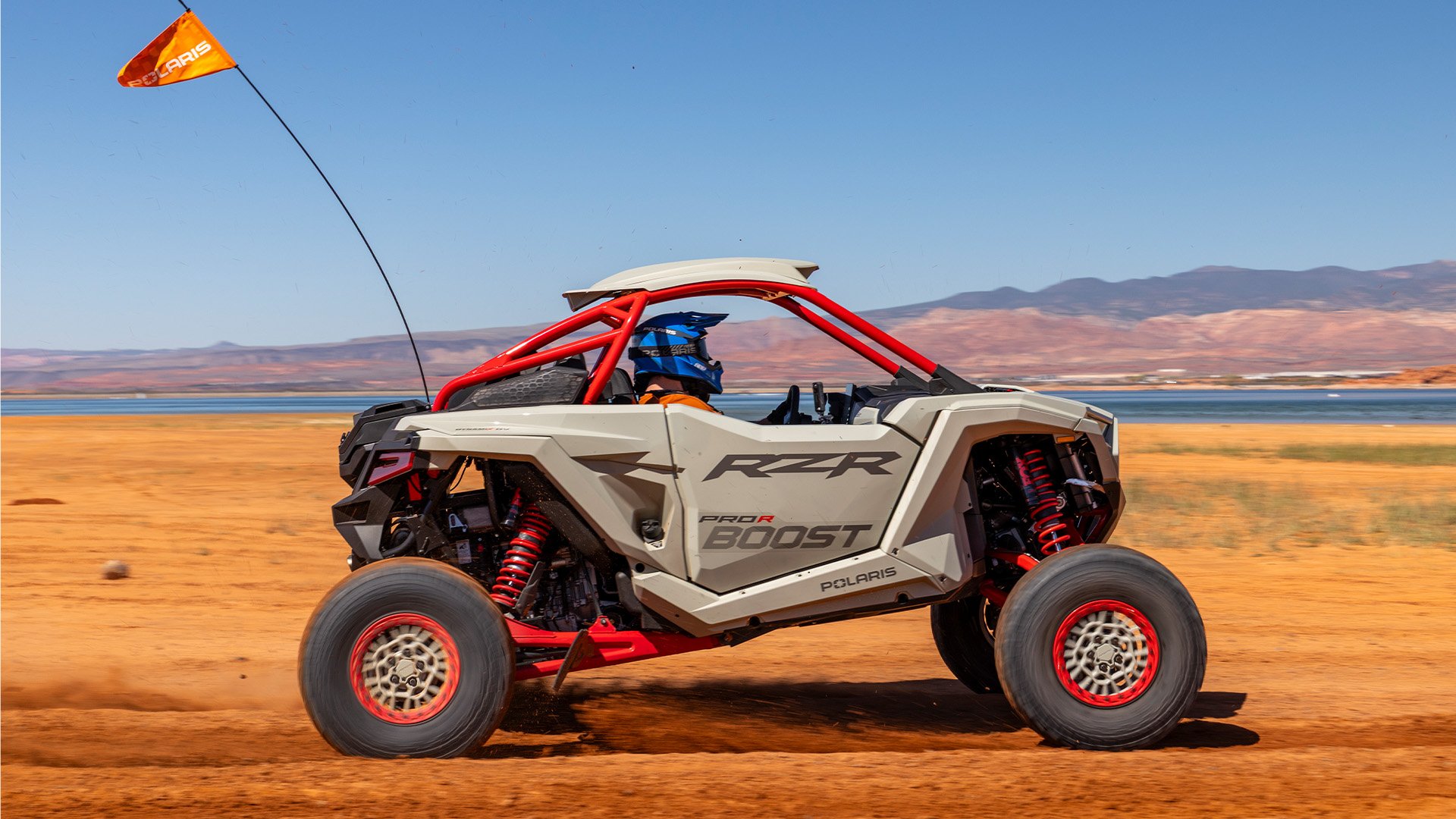
But that black-and-orange rig wasn’t the first to do it. Polaris pushed the boundary with the RZR Pro R a few years back. That machine wowed everyone when it debuted with a 225-hp, naturally aspirated 2.0-liter out of the Slingshot—a first in the segment. Polaris recently took it a step further by adding a 60-millimeter Garrett turbo, pushing total output to 275 hp.
To provide one more example, look at the Scion UTV concept that Toyota is toting around right now . It hasn’t been confirmed for production, but the global auto giant is strongly considering it . That rig has a Tacoma TRD Pro powertrain, consisting of a turbo 2.4-liter hybrid with an eight-speed automatic. How does 326 horsepower and 465 lb-ft of torque in a side-by-side sound? Ridiculous—that’s how.
If the other brands want to keep up, they’ll have to add way more boost to their existing 999cc engines or follow Polaris and KTM X-Bow’s lead. It’s worth mentioning that the latter two are specially positioned to make this happen. Polaris builds the ProStar 2.0-liter in-house, while KTM X-Bow has long used Audi engines in its track cars .
Out of the remaining manufacturers—think Can-Am, Honda, Kawasaki, and Yamaha—only Honda has an obvious potential supplier for actual car engines. I, for one, would love to see a Talon with a Civic Si or Type R engine. But that doesn’t mean the others lack equivalents in terms of displacement and horsepower.
Can-Am’s parent company is BRP, or Bombardier Recreational Products. The largest engine across all of its brands is the 1.63-liter Rotax three-cylinder from Ski-Doo, which makes 350 hp—plenty to compete with Polaris, KTM X-Bow, and the like. Kawasaki also has a jet ski engine that could possibly work: A supercharged, 1.5-liter four-cylinder that makes 310 hp. And then there’s Yamaha, which seemingly has enough expertise and capacity to build anything it decides is worth it. Yamaha’s current stable includes a supercharged, 1.8-liter four-cylinder that’s used for personal watercraft, and it has developed large-displacement engines for Toyota sports cars in the past.
I say all this to show that the sky is the limit for performance UTVs. As more people flock to the segment with their fat wallets and hunger for thrills, manufacturers are likely to oblige with better and more expensive machinery. Whereas car engines (or their equivalents) might’ve been cost-prohibitive in the past, a market is forming that welcomes top-shelf pricing, so long as the speed is top-shelf as well. The KTM X-Bow Arrow Black Limited Edition is $98,600, for cryin’ out loud.
Prepare to see even more of these machines out on the trail, and pray that the safety tech can keep up.
Got a tip or question for the author? Contact them directly: caleb@thedrive.com
The post The Next Big Thing for High-Performance UTVs? Sports Car Engines appeared first on The Drive .