OTC Racing Jack and Stand Review: Yes, It Is 2.5x Nicer Than Harbor Freight
The Drive ·
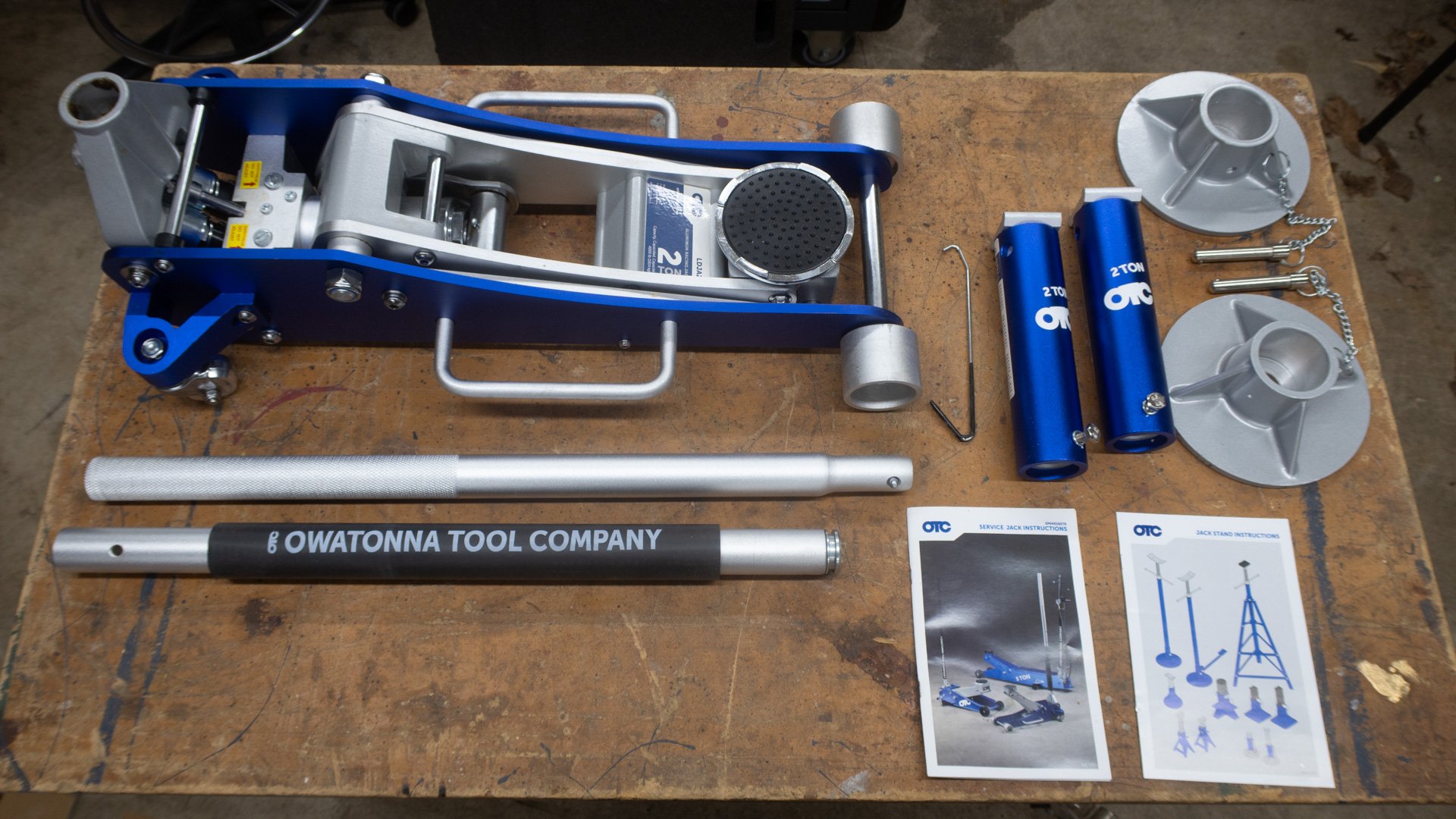
After a few months with OTC's aluminum racing jack and jack stands, I came to appreciate enjoyable it is to use professional-grade tools. The post OTC Racing Jack and Stand Review: Yes, It Is 2.5x Nicer Than Harbor Freight appeared first on The Drive .
The OTC aluminum jack stands and two-ton racing jack are an awesome combo for trackside tinkering and wheel changes. They’re reasonably light, they perform beautifully, and they’re backed by a limited lifetime warranty. These are professional tools, and they’re priced as such. But when downtime is money, and you can’t afford equipment that quits on the job, they make a real case for themselves.
OTC is a pro-tier tool supplier for automotive, motorsport, industrial, and other serious-work applications. The name is short for Owatonna Tool Company , since the outfit was founded in Owatonna, Minnesota, in 1925; today it’s a Bosch brand. You won’t find its stuff on the shelf at The Home Depot or AutoZone, but you will see it in racing pits and professional auto shops. I’ve been testing its highly portable two-ton racing jack and lightweight stands for months, and I now understand why they cost what they do: $564.99 for the jack and $153.99 for the pair of stands at Summit Racing. As of this writing, I also found the jack on sale for $539.99 on Amazon (the stands are also on Amazon for $153.99 ).
Summit also sells the whole jack plus stands kit , currently listed at $749.99.
Of course, “is it worth the money” and “should you buy it” are not quite the same question. But I can give you the context to decide for yourself if you’re jack shopping, as I was this past summer.
What I really wanted was a lightweight (and safe!) jack and stand kit that I could pack into my E46 , Miata , or Civic Si (RIP) and bring to autocross and hillclimb events. My home floor jack is a rusty old 70-pound Pittsburgh unit, and I try to resist spending a lot of dough when I can. So, like many of you probably would, I went to good ol’ Harbor Freight and picked up the standard blue two-ton. It worked fine, but to my great frustration, it couldn’t lift my Civic high enough from the rear-center jack point to get both rear wheels off the ground.
I returned it for that reason. While scrolling through the hundreds of other options (many of which look identical), I started wondering whether the huge price gap between pro-level tools and auto parts store offerings actually made sense. I got in touch with someone at OTC, and to my surprise, they sent me their trackside light-duty setup to find out: the LDJA2 2-Ton Aluminum Racing Jack and SA02 2-Ton Aluminum Jack Stands.
Swipe through to see some glamor shots of the OTC jack and stands, because I’m extra like that.
The OTC’s build quality is appreciably better than every other consumer-grade jack I’ve used, and its specs are a bit better too. With the saddle removed, it slides under cars as low as 3-1/4 inches, and it lifts to 18-5/8 inches, which gave me exactly the height I needed. For comparison, Harbor Freight’s Daytona two-ton aluminum jack, the closest thing in its lineup, tops out at 16-3/4 inches and weighs about the same: 42.7 pounds to the OTC’s 41. Still, there’s no reason to spend $565 just for a few more inches of lift. Plenty of cheaper jacks reach that high if you check the spec sheet. For the casual user, even an occasional racer, the cheapest jack-and-stand setup that meets the ASME PASE safety standard and fits your height and clearance needs will do the job.
Where OTC wins is in professional, always-on environments. The LDJA2 costs roughly two and a half times as much as Harbor Freight’s Daytona aluminum jack, which runs about $220. Both are sold as meeting the ASME PASE standard, but that standard is a safety floor, not a durability ceiling. With the OTC unit, you are paying for professional-grade hydraulic longevity, precise release valving (it’s wonderfully easy to control a car’s descent), and long-term parts support. OTC runs a replacement-parts site and a network of authorized service centers, so this jack is meant to be serviced, not tossed when it starts to weep.
Regarding the warranty, “limited lifetime” means it doesn’t expire, but it’s also not a free license to abuse the tool. OTC’s warranty covers defects in materials and workmanship for the product’s lifespan, which it defines as either a period OTC sets or the point where the tool stops working from normal wear and tear. In other words, it protects you from a jack that was built wrong, not one that’s worn out. Seals and other wear items count as consumables and aren’t covered, which matters on a hydraulic jack. Neither is damage from abuse, modification, contamination, rust, side loading, or using the tool for something it wasn’t designed to do. Coverage applies only to the original retail buyer and can’t be transferred. To file a claim, you need proof of purchase, and if OTC wants the jack shipped in for inspection, you prepay the freight. OTC reimburses you if the claim is approved; if it isn’t, you pay shipping both ways. OTC alone decides whether there’s a defect, and it chooses whether to repair or replace (with a comparable model if yours has been discontinued). That’s far better than the 90 days Harbor Freight gives its Daytona jacks, but it’s not a no-questions-asked swap.
If you want the absolute best bang for your buck on jacks, keep your eyes open for yard sales (seriously, I see at least one jack in almost every summer yard sale I drive by out here in the New York boonies). Harbor Freight is a decent second on paper, if you’re willing to trust it again after that 2020 recall of more than 1.7 million Pittsburgh-brand jack stands. There are plenty of mid-tier options at hardware and auto parts stores that go on sale regularly and will suit occasional use well.
That said, having now used this jack and these stands extensively on my cars, my Polaris Ranger , and go-kart , I think they’re worth the money. They just won’t be worth buying for everybody.
Professional automotive technicians and shop owners are the OTC’s target market, because those guys need consistent high-performance under daily use. But DIYers and weekend warriors with an appreciation for fine equipment will also appreciate the build quality on this stuff. If a few hundred bucks is not a big deal to you, or you just really like having products you can repair rather than replace, an OTC jack is a nice addition to a high-end home shop.
While I don’t have the budget to splurge on everything, it really is a pleasure to use high-quality tools rather than whatever you can grab from a bargain bin or eBay. The pump action, the hand grip, even the wheels on this OTC jack are just… nice. If you like wearing a decent watch, good sunglasses, and well-made clothes, you’ll like using tools that are made to be run for a career, not manufactured as cheaply as possible. And these round stands! Every time I slide these under one of my vehicles and get my hand around that fine tube of aluminum, I get a tiny little whiff of joy.
So yeah: OTC builds this stuff for shop techs who lift cars all day, and if your tools keep your paycheck coming, a pro-grade jack with real parts and warranty support makes business sense. If you’re looking for the most efficient way to get your car off the ground for oil changes, spend your money elsewhere. But if you’ve got a healthy toy budget and appreciate well-engineered equipment, the LDJA2 and SA02 combo is a treat to use.
Full Disclosure: OTC sent us these tools to check out and write this review with.
The post OTC Racing Jack and Stand Review: Yes, It Is 2.5x Nicer Than Harbor Freight appeared first on The Drive .