Dugongs won’t move the needle for US businesses in China
Semafor ·
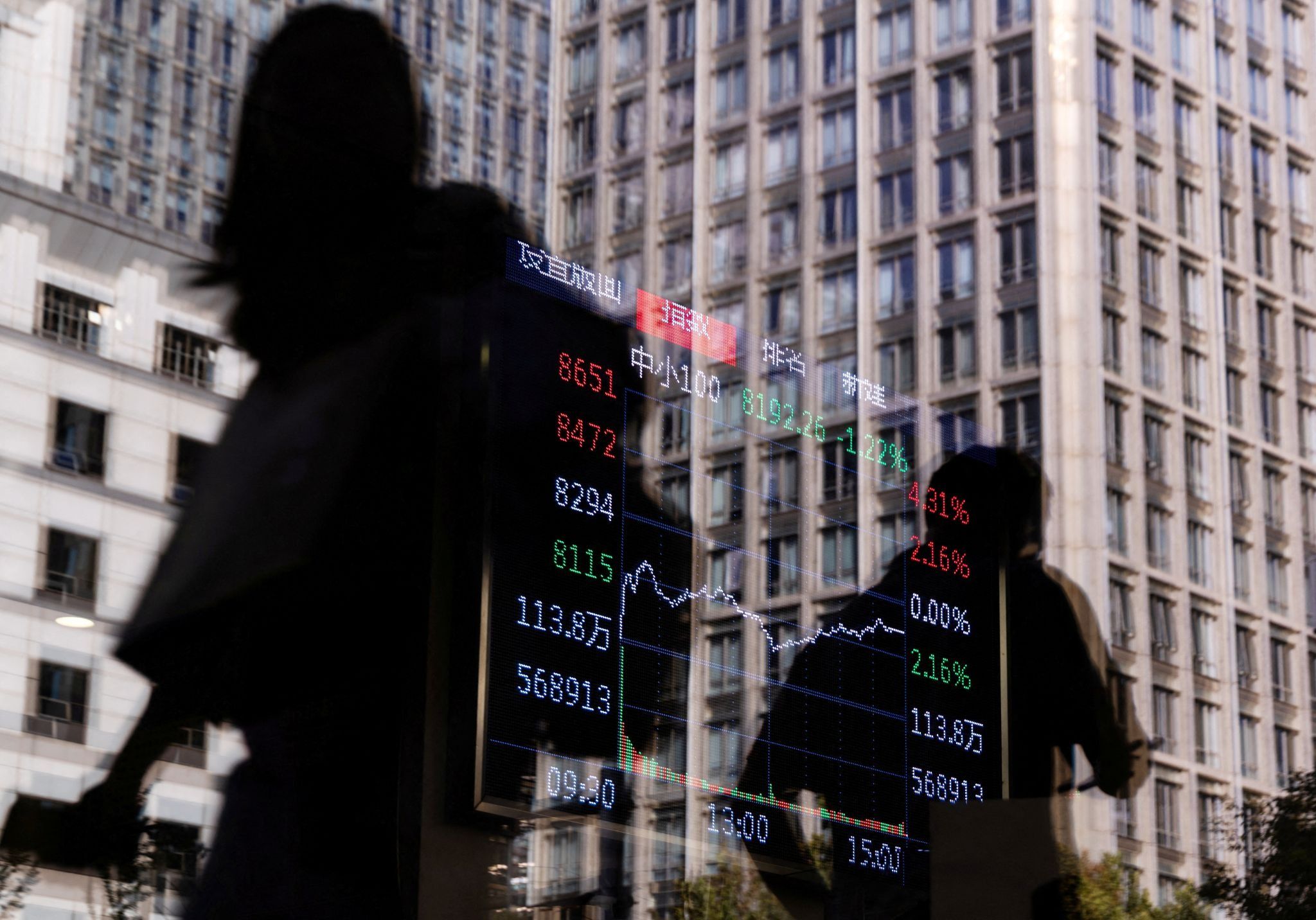
The US-China trade deal is good for politics, not-so-good for business.
Just in time for Halloween and the Christmas shopping season, the US and China have agreed to cut tariffs on Chinese toys, holiday decorations, and fireworks.
In the other direction, China plans to drop duties on US exports of grains, nuts, frozen meats, and live animals — including donkeys, mules, horses, and dugongs.
Dugongs?
Tariff schedules are legendary for being packed with oddities, like dugongs — marine mammals also known as “sea cows” — as countries haggle over political priorities and balance domestic lobby groups. This particular trade deal’s political overtones are more overt: US midterm elections are five weeks away, with inflation topping the list of voter concerns and a backlash building in grain and cattle-raising states to President Donald Trump’s trade and tariff policies.
American farmers are suffering not just from lost Chinese markets but from soaring prices for diesel and agricultural equipment, often stuffed with imported parts. Even deep-red Ohio is in play .
For US businesses operating in China, this deal offers less to cheer about. Previous administrations — including the first Trump one — made hard asks, challenging Beijing on industrial subsidies, IP theft, forced technology transfers, and hidden obstacles to market access like state procurement practices biased against foreign players. These are now mostly consigned to the “too hard” category. Hence, one of the few deliverables from last week’s summit was an agreement to lower tariffs on $30 billion of “non-sensitive” goods traveling each way — a relatively easy negotiating lift, but one that packs a heavy political punch.
In a way, the US strategy is understandable: Hard-bitten American trade negotiators have almost nothing to show for decades of trying to change the way China’s state capitalist system works.
And it makes sense to try to ring-fence trade flows that act as a stabilizer in the relationship, unambiguously benefiting workers in both countries; Santa’s workshops in southern China that churn out Christmas tree lights, Nativity crèche figures, Barbie dolls, and board games soak up millions of underemployed laborers.
But from a business perspective, “non-sensitive” is also something of a non sequitur: It covers legacy categories (and even so, only a fraction of total two-way trade in goods that reached $415 billion last year), but disregards high-tech products shaping the 21st-century economy, sectors where China is engaged in an all-out drive for self-sufficiency. US chip sales are now the bedrock of American business in China, but as The Economist notes, semiconductors are also the market most at risk .
Ker Gibbs, the former president of the American Chamber of Commerce in Shanghai, sees the trade deal as “shelving the difficult stuff, and focusing on tactical wins that make good headlines.” He also cautions that Chinese language around commitments to purchase US coal — a highlight of the deal, from Washington’s perspective — is deliberately vague.
Similarly, although China earlier promised to buy 25 million metric tons through 2028, US soybeans don’t feature in the product list, an omission that gives Beijing political leverage headed into the midterms.
“China is still dragging its feet,” Gibbs told me. “It’s their habit: Delay, delay, delay.”
True, US businesses are still making decent money in the China market. AmCham Shanghai says that 78% of its members are profitable and, perhaps surprisingly, despite Trump’s tariff war, sanctions and countersanctions, and geopolitical strife, US brands haven’t lost their cultural cachet. Ralph Lauren, for one, is on a roll: It’s revenue in China was up more than 40% in the last quarter, boosted by superfans like Xiao Neng who says he’s spent at least $1 million in recent years on a wardrobe emblazoned with the polo logo as part of his search for the “ American Dream .” Among Gen Z consumers, sales of Coach’s Brooklyn grab-and-go bags are exploding. McDonald’s is opening two or three new stores every day.
Still, sales by US-listed companies that do business in China have flatlined for the past five years, and the real data point to pay attention to is the intention of US businesses in the country to keep investing, the true measure of how they view their prospects.
Only 31% planned to do so in 2026, according to AmCham Shanghai. Christmas giveaways — and dugongs — won’t move the needle.