Diving into Maintenance with NASA’s X-59
NASA Science ·
On a hot Thursday at Edwards Air Force Base in the California desert, as NASA’s quiet supersonic X-59 aircraft paused between its 11th and 12th flights, mechanic Jonathan Reynaga climbed a ladder to the top of the aircraft and grabbed a flashlight. He strode down the plane’s wing until he reached the distinctive air inlet that leads […] The post Diving into Maintenance with NASA’s X-59 appeared first on NASA Science .
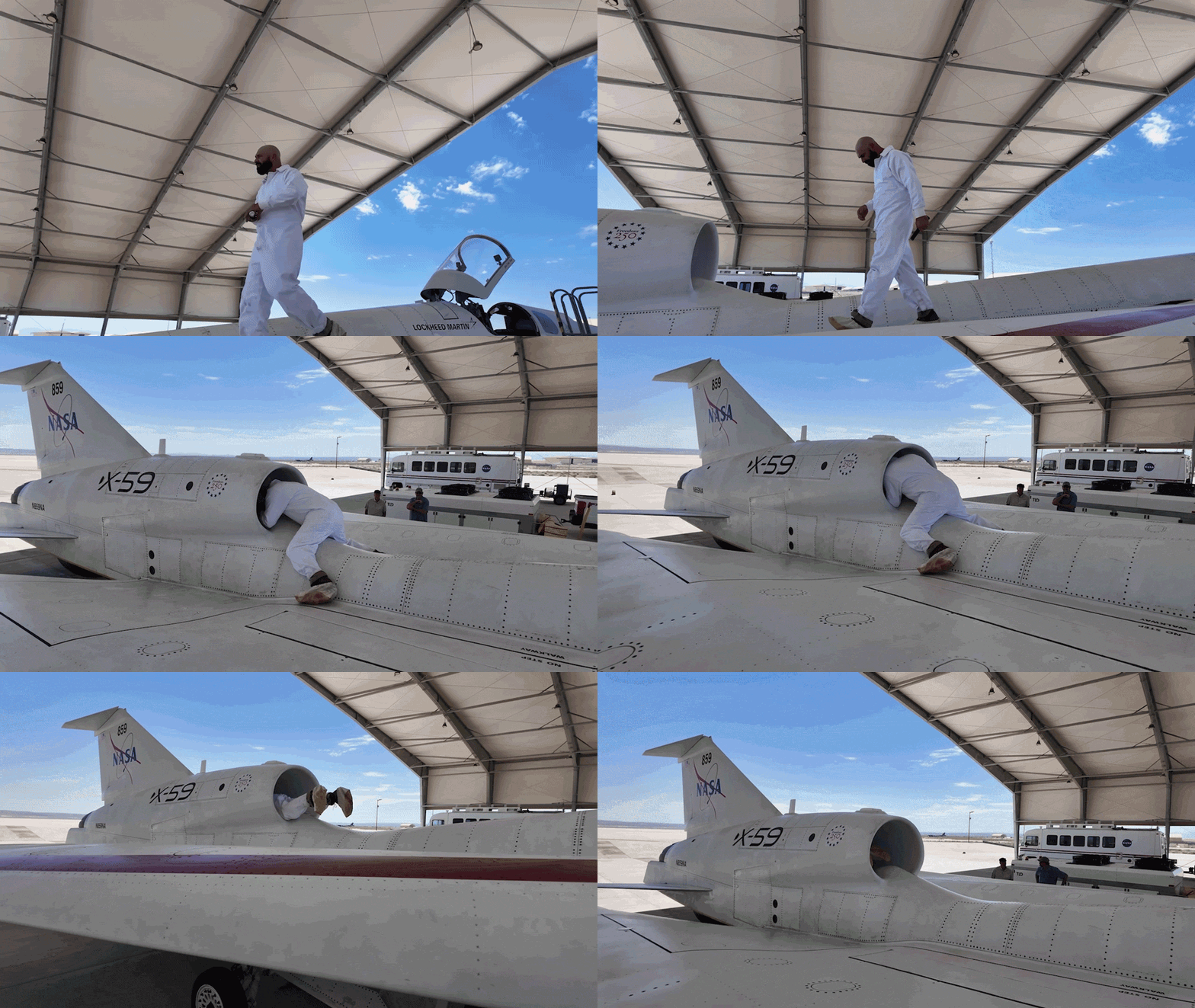
On a hot Thursday at Edwards Air Force Base in the California desert, as NASA’s quiet supersonic X-59 aircraft paused between its 11 th and 12 th flights, mechanic Jonathan Reynaga climbed a ladder to the top of the aircraft and grabbed a flashlight. He strode down the plane’s wing until he reached the distinctive air inlet that leads to its engine, then stuck his head in, shining his light around.
And then, without hesitation, he dove headfirst into the inlet, completely disappearing into it.
The moment, caught on video April 30, might seem bizarre to those unfamiliar with aircraft maintenance. But “duct diving” is just part of a normal day at NASA’s Armstrong Flight Research Center.
“It’s a pretty normal procedure for aircraft maintenance,” said Paul Dees, NASA X-59 deputy propulsion lead. “What they’re trying to do is check for any potential damage, any potential foreign objects or debris that could affect engine performance.”
The X-59’s inlet slopes down toward its single F414-GE-100 engine, so Reynaga, a general flight mechanic with X-59 contractor Lockheed Martin Skunk Works, had his head lower than his feet as he went in. In a crowded space not much wider than his shoulders he inspected the engine’s fan blades and other components. And he had to move carefully around special sensors that the research team uses to gather data on engine performance in flight.
While telling your friends about how you dove headfirst toward an experimental aircraft’s engine might make for a cool story, “it’s not a temperature-cool job,” Dees said. The X-59 stays in the shade for maintenance, but desert temperatures regularly rise to over 100 degrees Fahrenheit, and the aircraft is still cooling down after flight. “We have not made this job easy on the technicians,” he said.
Reynaga remained in the inlet for few minutes, then wriggled out backwards. The checkup was brief, but vital. Although the X-59 undergoes more in-depth maintenance on a regular schedule, a duct dive paired with a visual examination of the aircraft’s exhaust after every flight is a good way to quickly assess the health of its engine.
And don’t worry, he is not left alone during the process. Another member of the team keeps an eye out until he safely re-emerges.
Technicians duct dive on NASA’s research jets across its centers. At Armstrong, that includes the aircraft that accompany the X-59 on test flights: an F-15 (deep, rectangular inlets that a person can crawl in fairly comfortably) and an F/A-18 (a round, tight space that curves as it travels back, making for a less pleasant experience).
The X-59’s inlet has few advantages over the F-18, said Juan Salazar, crew chief for the agency’s Low Boom Flight Demonstrator project. It’s similar to the F-18’s in diameter, but shallower, making for an easier dive. But regardless of the aircraft, a human mechanic is still the best way to get the job done.
“Maybe one day there will be something that will replace this inspection, but right now, the best way to do it is to send a person in,” Salazar said.
The X-59 has a top-mounted engine. This is a key element of the design that will allow it to fly supersonic with just a quiet thump instead of a loud sonic boom. But it also means the X-59’s engine doesn’t pull in the kinds of debris that can get sucked up by lower mounted engines during takeoffs and landings, Salazar said.
All of which means that after 38 flights, none of the X-59’s duct dives have found anything but a damage free engine. “And that’s how we like it,” Dees said.
The post Diving into Maintenance with NASA’s X-59 appeared first on NASA Science .