NASA Adds New Science Investigations for Moon Base
NASA Science ·
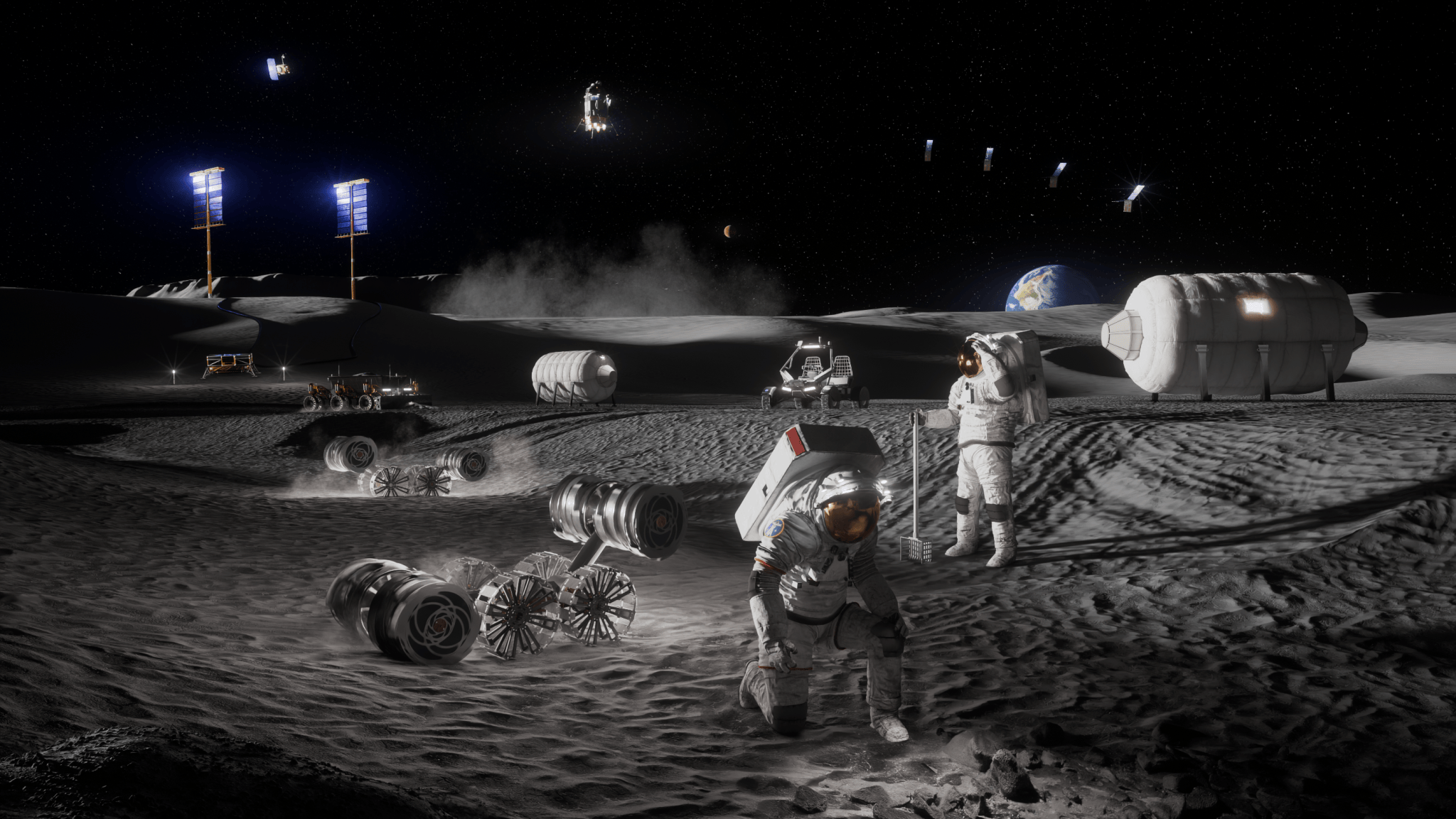
NASA selected three new scientific investigations and their payload suites to advance our knowledge of the Moon and help pave the way for building humanity’s first lunar outpost, Moon Base. The suite of science instruments and technologies was selected through NASA’s Payloads and Research Investigations on the Surface of the Moon (PRISM) program and will […] The post NASA Adds New Science Investigations for Moon Base appeared first on NASA Science .
NASA selected three new scientific investigations and their payload suites to advance our knowledge of the Moon and help pave the way for building humanity’s first lunar outpost, Moon Base.
The suite of science instruments and technologies was selected through NASA’s Payloads and Research Investigations on the Surface of the Moon (PRISM) program and will fly to the lunar surface using the CLPS (Commercial Lunar Payload Services) initiative as part of the agency’s Moon Base Program. The payloads will help researchers understand lunar resources, map natural shelters, and assess environmental hazards, laying the foundational groundwork for a safe and sustained human presence under the agency’s Artemis and Moon Base programs.
“NASA Science is building the ultimate interplanetary survival guide to ensure that science goes first to the lunar surface to provide our future astronaut crews with the vital information, resources, and safety precautions needed ahead of time to survive the night on the Moon,” said Nicky Fox, associate administrator, Science Mission Directorate, at NASA Headquarters in Washington. “These PRISM selections will directly help NASA minimize risks to our astronauts while maximizing our agency goals as we set up humanity’s first lunar outpost in preparation for sending the first astronauts to Mars.”
The three payload suites are:
Lunar Environment Monitoring Station – South Pole ( LEMS-SP):
Principal Investigator: Dr. Mehdi Benna, University of Maryland, Baltimore County
Geophysical Investigation for Mapping Lunar Interior (GIMLI):
Principal Investigator: Dr. Nathaniel Putzig, Planetary Science Institute
Distribution of Ice and Surface Characteristics Observatory (DISCO):
Principal Investigator: Dr. Ariel Deutsch, NASA’s Ames Research Center in California’s Silicon Valley
“Each new PRISM selection strengthens our ability to deliver ambitious, transformative science to the lunar surface,” said Brad Bailey, director of the Exploration Science Strategy Integration Office in NASA’s Science Mission Directorate. “These investigations exemplify how Artemis and Moon Base are expanding the frontier of lunar exploration, advancing innovative technologies, deepening our understanding of the Moon’s environment, and paving the way for future astronaut missions.”
NASA is increasing its cadence of lunar missions to build a Moon Base, delivering science investigations and technology payloads that contribute to American scientific preeminence, strengthen a sustained presence on the Moon, and advance future human exploration.
NASA’s CLPS initiative supports the Moon Base Program, as the agency works with American companies to deliver scientific, exploration, and technology payloads to the Moon’s surface and orbit.
For more information, visit:
https://science.nasa.gov/lunar-science
-end-
Tiffany Blake Headquarters, Washington 202-358-2546 tiffany.n.blake@nasa.gov
Details Last Updated Sep 30, 2026 Location NASA Headquarters Related Terms Moon Base Commercial Lunar Payload Services (CLPS) Missions The post NASA Adds New Science Investigations for Moon Base appeared first on NASA Science .