Why are bogs so good at preserving dead bodies?
Popular Science ·
They essentially 'pickle' people. The post Why are bogs so good at preserving dead bodies? appeared first on Popular Science .
In August of 1984, commercial peat cutters working near Wilmslow, about a half-hour drive south of Manchester, England, discovered a dead body in the moss. The corpse was determined to be a 25-year-old man with a closely shorn beard and well-manicured nails . He had suffered two or three heavy blows to the head, and had sustained a cut throat and a fractured rib. But this wasn’t a fresh corpse: His body had been laying in that peat bog for nearly 2,000 years .
The “ Lindow Man ” is just one of at least 2,000 bog bodies recovered from Europe’s peatlands . They date from the Mesolithic period, which ended in Europe between 8,500 to 5,500 years ago , all the way up through World War II .
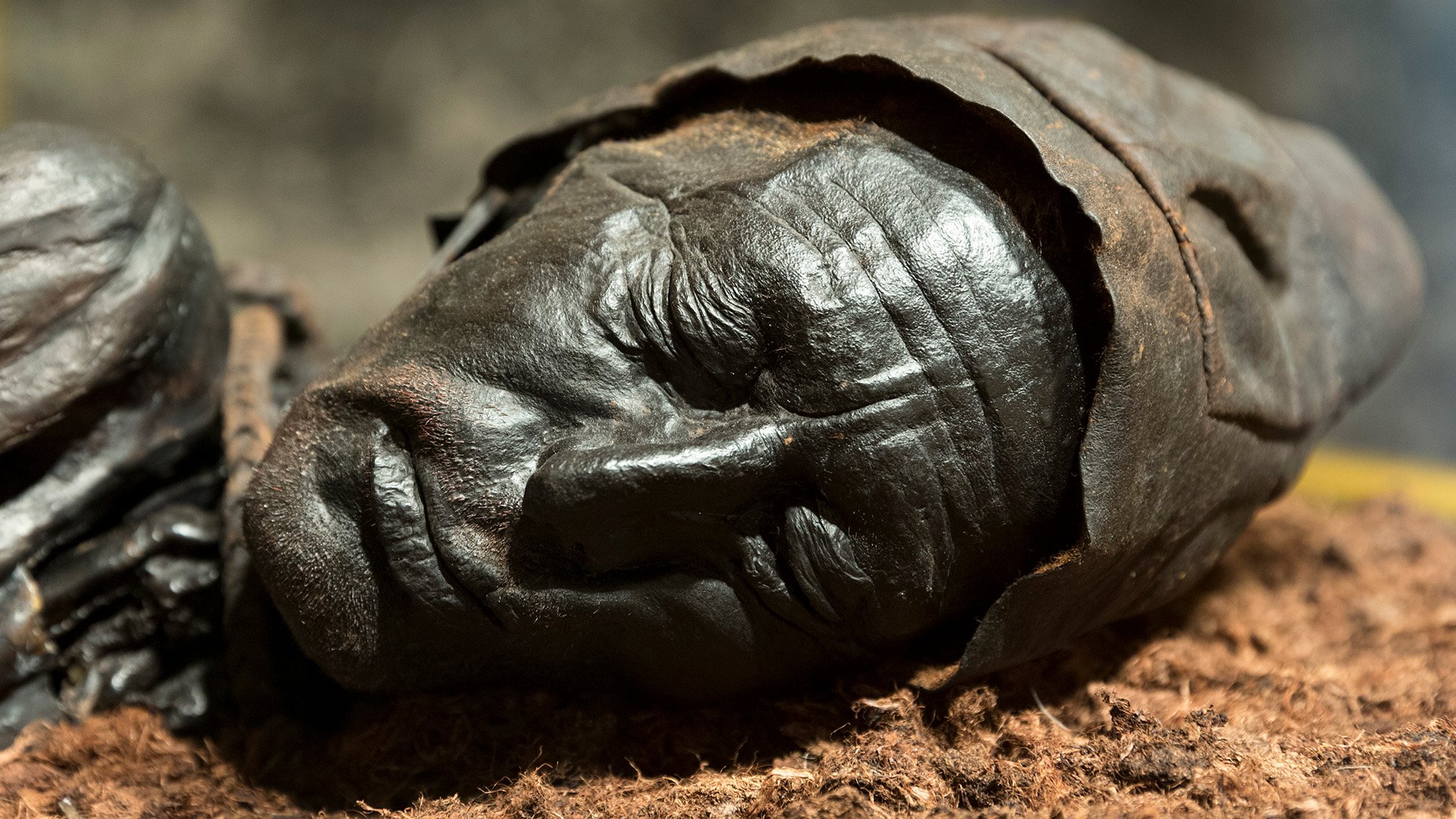
“Bog bodies” are essentially human corpses that peat bogs have naturally preserved and mummified. Quite often, their skin, hair, nails, and internal organs are remarkably intact for thousands of years. Their bones, however, are a whole other story.
To find out more about why bogs are so good at preserving bodies, Popular Science turned to author Anna North , a journalist whose fascination with peat bogs and preserved “bog bodies” inspired her national bestseller Bog Queen. This eco-historical mystery novel details what happens when a forensic anthropologist starts investigating a well-preserved Iron Age bog body, and required extensive research on North’s part. The author first got the idea for her book after coming across the Lindow Man at London’s British Museum, where he’s on permanent display .
“He doesn’t look great,” she says, “but he’s just so recognizably still a human.” The fact that North was sharing a room with this person who ate, drank, and walked the earth 2,000 years ago left an indelible mark on her. She wanted to learn more. “One of the first things I realized is that I didn’t have a good sense of what a peat bog would even look like.”
A bog or “peat bog” is an acidic, nutrient-poor wetland ecosystem . It’s made up of peat, which is ground that’s soft and spongy and consists of partially decayed plant material that builds up over hundreds or thousands of years.
“Peat is really any kind of organic matter that builds up faster than it decays,” says North. It can be grasses, reeds, roots, and shrubs. But peat mostly consists of Sphagnum moss , a large group of shaggy-looking, moisture-loving mosses .
“Sphagnum moss has the capacity to take in a lot of water and store it, so it becomes really spongy and waterlogged.” This creates an excellent environment for preservation, says North, “because there’s not much air.”
While bogs exist across the globe, you’ll find them mostly in cool, northern climates with lots of rain. For years, these mysterious landscapes have appeared as ominous settings in literature. They’re especially popular in Victorian detective fiction and gothic novels like Sir Arthur Conan Doyle’s The Hounds of the Baskervilles and Daphne du Maurier’s Jamaica Inn . And for good reason. Their mist-shrouded surfaces (a result of the cool, damp air that sits above their spongy terrain), unstable footing, and stagnant waters make them natural backdrops for the unknown. Of course, there are also the bodies.
The preservation of bog bodies results from a highly-detailed balance of water source, chemistry, and vegetation.
Bogs get almost all of their water from rain and snow , which makes them low in minerals and nutrients. The water also doesn’t move thanks to the bog’s sponge-like moss.
Thick layers of decomposed organic material choke off the air supply to the decaying plant matter underneath. Without oxygen, the environment becomes highly acidic and aerobic bacteria and fungi are unable to thrive. This means they can’t break down that dead plant (and human) material the way they normally would.
Instead, the bog’s high acidity essentially “pickles” human corpses, many of which were left behind as part of a ritual sacrifice or the result of executions . The environment’s low pH (the result of its high acidity) acts like a pickle juice brine, stopping harmful bacteria from growing and preserving bodies almost like “ living time capsules .” Sphagnum moss also releases a complex carbohydrate that binds to the proteins in human skin and tissue, called sphagnan . This carbohydrate turns the skin leathery and a dark-brown “tea” color while protecting it against decay. But while this unique environment slows a body’s decomposition , the bog’s intense acid leaches the calcium right out of human bones.
“If you look at X-rays of bog bodies, they’re not going to look like an X-ray of a living person,” says North. Mostly because the bones are softened , warped, or have dissolved completely.
Raised bogs , which are deep, dome-shaped peatlands that are both wetter and higher than their surrounding lands, are best at preserving bodies. That’s because they’re both highly acidic and entirely void of oxygen.
The shallower peat found in blanket bogs means that bodies decompose faster (though bog bodies are still found here). Fens, which are peat-accumulating wetlands that both surface water and mineral-rich groundwater replenish, are less acidic. This means that a body’s soft-tissue will typically decay.
One way that forensic anthropologists can typically tell the difference between a recently decreased person and a bog body is through their teeth. While researching for her book, North discovered that people who lived and died before there was refined flour would have really different patterns of tooth decay than modern-day eaters.
Back then, she says, “They might actually grind wheat or corn with stone, and little bits of stone would end up in their flour. Those people would then chew on that stone and it would grind down their teeth.”
Why do dead bodies move and make noise?
Cremation or casket? Here’s the most eco-friendly burial option.
Can carnivorous plants eat people?
What happens when you donate your body to science?
How human composting turns bodies into soil
Some people really are werewolves—at least, in their minds
What happens to your body when you die in space?
North also learned that identifying a bog body is a collaborative effort. A bioarchaeologist, who studies human biological remains at archaeological sites , might be brought in to determine the corpse’s age and sex, while a pathologist would examine the cause of death.
“It turns out that the same process that makes bogs really good at preserving a body also means that they’re storing this enormous amount of carbon,” says North.
Since there’s no oxygen to break down a bog’s organic plant matter, it just piles up layer by layer forming thick, carbon-rich peat . In fact, peatlands (including bogs) only cover roughly three-perfect of the planet’s land surface, though they store twice as much carbon as all the world’s forests combined. “They’re just a really powerful resource.”
Bogs are generally safe to walk across as well, despite their reputation for being “graveyards” of sorts. “There are cases of people appearing to have accidentally died on bogs,” says North. “Still, if you’re an average person visiting a bog today and you stay on the marked trail, I am not concerned for your safety.”
In Ask Us Anything , Popular Science answers your most outlandish, mind-burning questions, from the everyday things you’ve always wondered to the bizarre things you never thought to ask. Have something you’ve always wanted to know? Ask us .
The post Why are bogs so good at preserving dead bodies? appeared first on Popular Science .