MIT develops robot that slithers through intestines like a snake
Popular Science ·
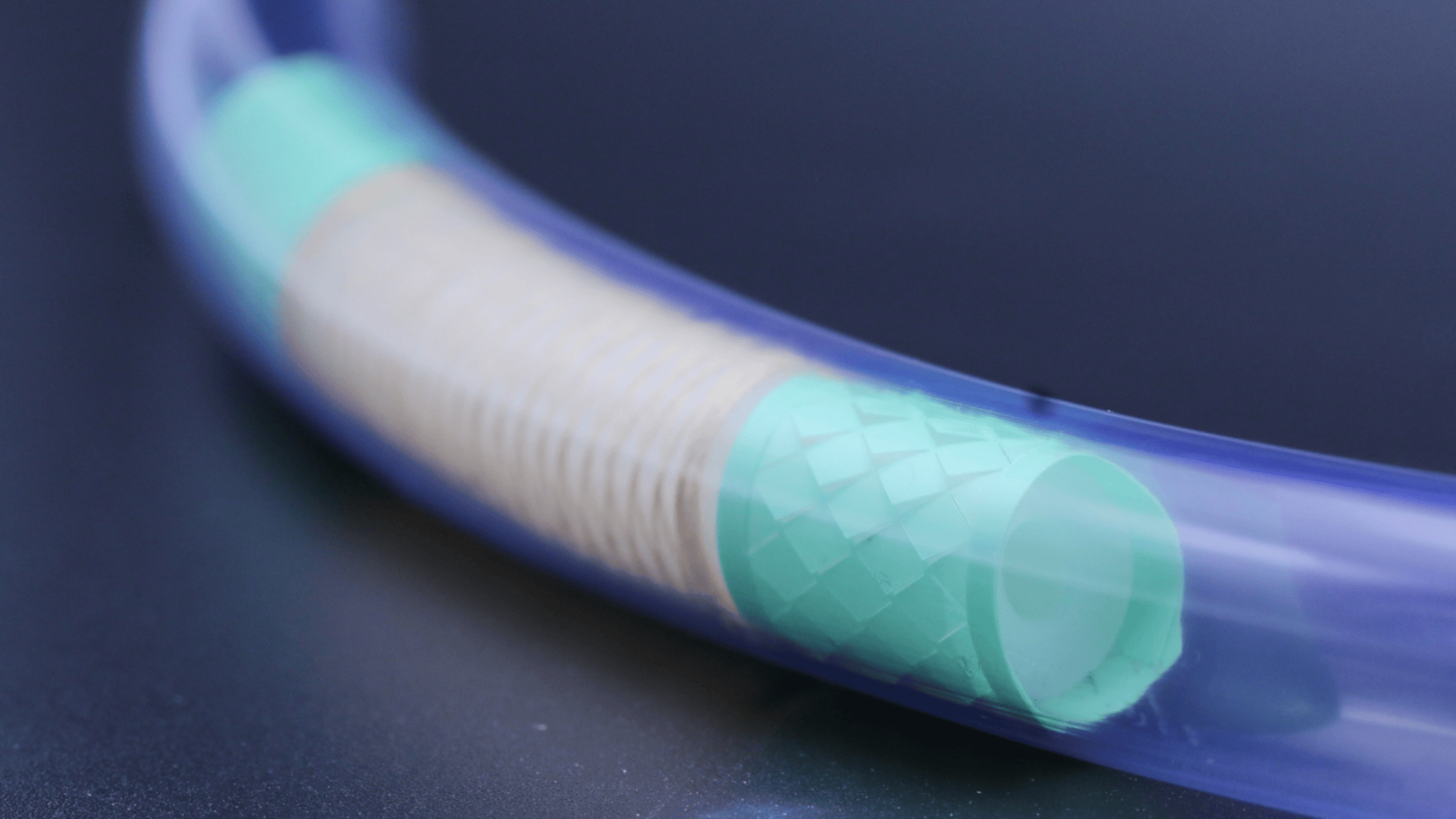
It can enter through the front or back. The post MIT develops robot that slithers through intestines like a snake appeared first on Popular Science .
Worms are usually the last thing someone wants in their gut. Just ask this unfortunate Alaskan bear recently spotted with several multi-foot long tapeworms hanging out of its butt. However, a new type of gut-crawling worm being designed by engineers at the Massachusetts Institute of Technology (MIT), may actually be here to help.
Their soft r obot , called BIOSENTER, is designed to autonomously inch through the crowded, cramped, and coiled small intestine, contracting and extending its body much like an earthworm or snake . It does that by alternately pumping air through four inflatable chambers on either side of its hollow body. Once inside, the wiggly worm-bot can snap photos, administer drugs, and even take small biopsy samples. It can also slither into the intestine via a person’s mouth or rear-end all by itself.
Horrifying as all of this might sound, the team behind it says the robot could offer a faster, less labor-intensive alternative to double-balloon enteroscopy, the current standard for examining the small intestine. And with intestinal diseases and cancers on the rise , any methods to detect issues early could have potentially life-saving results. The team published details about the robot this week in the journal Science Robotics .
The small intestine is a particularly challenging place to run diagnoses. Though it can measure 20 feet long, it’s tightly coiled up in a cramped part of the abdomen. It is also hemmed in by the stomach and colon, which can make it difficult to reach. But bleeding, lessons, and blockages can develop in the small intestine which can lead to big problems if left untreated. Currently, the most common way to examine the organ is double-balloon enteroscopy. Healthcare workers repeatedly inflate and deflate two balloons to work a scope through the digestive tract. The method works, but it’s slow and requires constant hands-on attention.
“The fundamental challenge that we’re trying to overcome is how to evaluate that 20-to-25-foot segment of the small intestine in a way that can be more automated,” Giovanni Traverso , an MIT mechanical engineer and study-co-author, said in a statement .
The team turned to nature for a solution: snakes. These scaly reptiles move by alternating contracting muscles on either side of their body. Aside from offering protection, their scaly bodies also give them extra traction as they slither. The MIT researchers looked at this natural byproduct of evolution and saw a design that could work well in the narrow, slippery corridors of the human GI tract.
With the snake inspiration in mind, the team built a soft, rubbery robot with a hollow body. Its worm-like frame measures about 3.7 inches in length with a half inch diameter. These dimensions make it compact enough to travel through the small intestine, as well as other narrow passages in the body, like the esophagus. BIOSENTER has four inflatable chambers arranged along either side of its tubular body. These chambers inflate and deflate in alternating combinations, which is how it moves forewarn and bends to change directions. Keeping with the snake theme, the robot’s exterior is fitted with a textured, scale-like coating that improves its traction.
Additionally, the worm has expandable sections built in its head and tail inspired by a type of Japanese origami called kirigami , that uses cuts as well as folds. These inflatable segments alternately grip and release the intestinal wall, anchoring the robot so it can pull itself forward. BIOSENTER’s hollowed out body houses a variety of tools: cameras for imaging, a sprayer for drug delivery, and tiny clippers to take tissue samples. The entire thing is tethered to an external system via cable. Though it’s meant to move mostly autonomously, healthcare workers can also control BIOSENTER through a handheld device reminiscent of an Xbox controller.
“By using kirigami sleeves to enhance surface friction, the robot can generate localized tissue engagement traction for locomotion without relying on excessive stretching of the delicate small intestinal tissue,” added MIT graduate student Ahmad Mujtaba Jebran ..
The team tested the robot on several sedated, living pigs, because their GI tract anatomy resembles the kind humans have. During testing, BIOSENTER navigated the pigs’ intestines for 11 minutes, capturing real-time images, collecting small tissue biopsies, and delivering fluid to specific locations.
BIOSENTER notably isn’t the first gut-crawling robot. In 2021, a team from the University of Macau in China designed a prototype robot inspired by an African spider that moves using a cartwheel motion. In that case, the robot is injected via a vitamin sized capsule and traverses the GI tract (including the small intestine) via a magnetic field. Rather unglamorously, the spider bot is expelled by pooping.
Nobody said science had to be pretty.
The post MIT develops robot that slithers through intestines like a snake appeared first on Popular Science .