The Elon Musk Funder Trying to Sway the Race for LA’s Top Lawyer
The Intercept ·
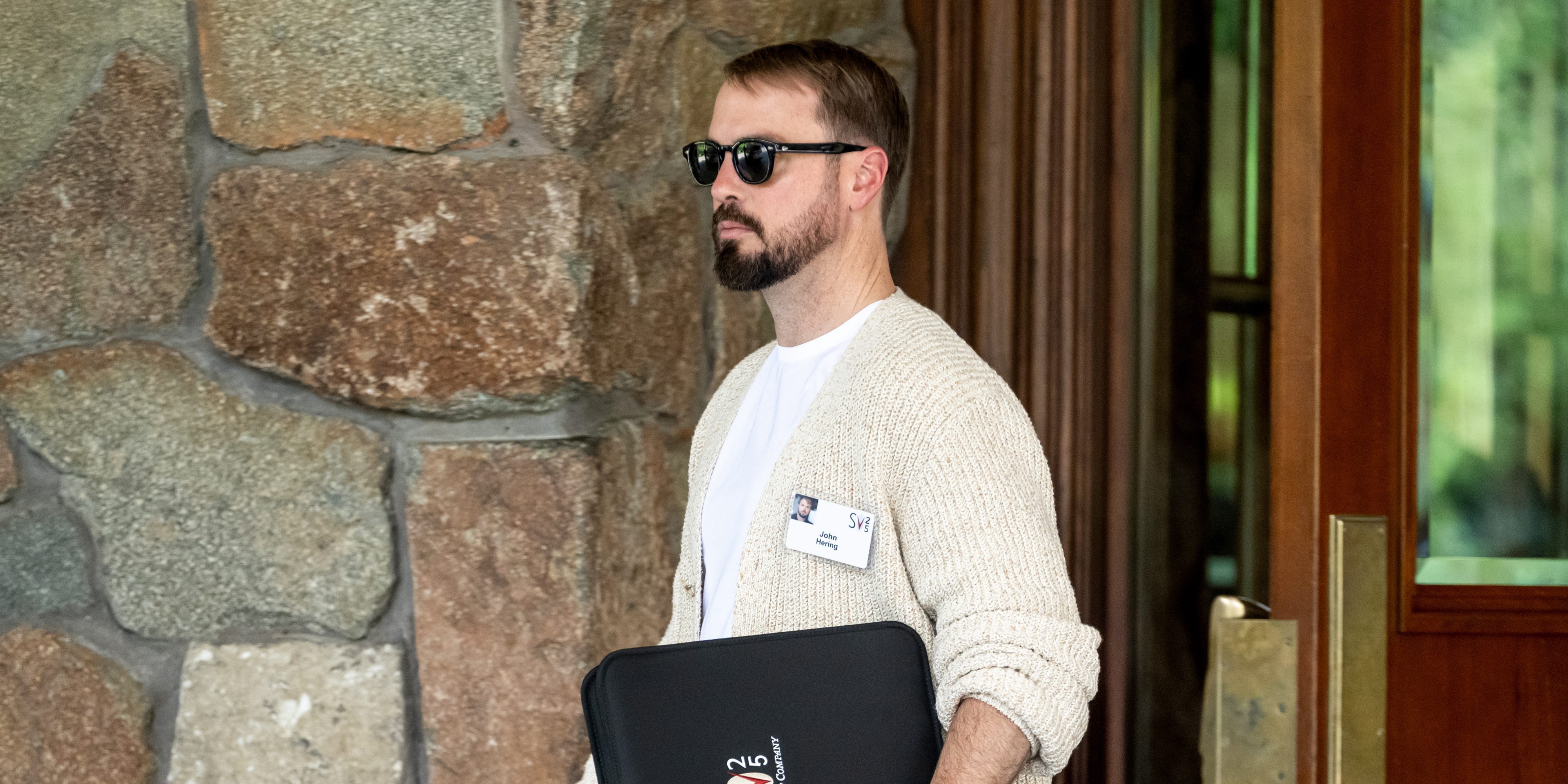
The leading candidate for LA city attorney has the backing of the local DSA and vows to regulate Big Tech. Tech investors are spending millions against her. The post The Elon Musk Funder Trying to Sway the Race for LA’s Top Lawyer appeared first on The Intercept .
A DSA-backed California prosecutor who helped force Meta to pay a historic $17 billion settlement this year is on a glide path to become the top lawyer for Los Angeles — unless a tech investor cozy with Elon Musk can spend enough to stop her.
San Francisco resident John Hering has sunk more than $1.25 million into an effort to defeat Marissa Roy, a deputy attorney general at the California Department of Justice endorsed by the LA chapter of the Democratic Socialists of America, and to support John McKinney, a county prosecutor running an uphill general election campaign. It’s a heavy injection of cash from a single individual in a local race for a little-known office, but it pales in comparison to Hering’s private-sector spending: In 2022, his investment firm Vy Capital pumped $700 million into Musk’s takeover of the company then known as Twitter and $300 million into his tunnel-construction Boring Company.
A co-founder of the cybersecurity company Lookout, Hering is spending in line with the tech industry in which he’s long been invested. While the city attorney’s office is commonly used as the city’s defense against litigious residents, the office also carries the power to mold legislation, enforce state law, such as labor protections, and take on corporations and the federal government in court. Roy has vowed to wield the office’s regulatory muscle against corporations — including Big Tech.
“Monopolies and Big Tech are things that [Roy] sees as an opportunity to wage battle against,” said former LA City Councilmember Mike Bonin, who has not endorsed either candidate. “If I were Big Tech, I would certainly think, ‘OK, well, this is someone who is a potential threat.’”
Hering, who did not respond to The Intercept’s request for comment, is part of a group of tech titans backing McKinney. Others include the founders of Ring, Tinder, and Boingo, and investors in Anthropic , Anduril , and SpaceX , who have collectively put more than $1.9 million into pro-McKinney committees. A group called “Committee to Expand the Middle Class Candidate” — backed by the property rental tech giant Airbnb — donated an additional $4.2 million to a committee supporting McKinney.
To help get McKinney through the June primary election, Hering and fellow tech investor Diego Berdakin poured more than $1 million into another committee. Over the past month, Hering’s general-election spending group, Neighbors for John McKinney, has been paying for TV and online ads and mailers that play up McKinney as “a lifelong Democrat” and “100% anti-MAGA.”
The same can hardly be said for the group’s top funder.
After giving to Hillary Clinton’s failed 2016 presidential bid and Democratic candidates like Beto O’Rourke, Hering donated $41,300 to the Republican National Committee and $500,000 to Musk’s America PAC in 2024 to support Donald Trump’s run for president. He has publicly praised Musk’s chaotic purge of the federal government through his so-called Department of Government Efficiency program and called the world’s richest man an “ American hero ” for offering to pay TSA salaries during the spring government shutdown. In 2025, Hering and Ring founder Jamie Siminoff, who has also donated to Neighbors for John McKinney, attended a White House dinner where Trump hosted dozens of high-profile Silicon Valley figures. The pro-McKinney group is also funded by billionaires Rick Caruso, a failed LA mayoral candidate, and Ron Burkle, a Democratic megadonor.
Earlier this cycle, Hering, who listed San Francisco as his residence in campaign finance documents, also waded into the LA mayoral election — boosting right-wing reality star Spencer Pratt .
Tech industry spending in LA’s elections arrives amid a midterm cycle where Big Tech and artificial intelligence have doled out millions of dollars to exert influence in congressional and state races across the U.S. as lawmakers grapple with how to regulate the industries. Musk, for example, has dropped more than $442 million into the midterms, including more than $70 million in his political action committee, America PAC, in October alone. And in state Assembly and Senate races across California, tech and AI executives have spent more than $29 million, according to Tech Equity Action, a political nonprofit that lobbies to craft tech-related legislation while advocating for workers’ rights.
California Gov. Gavin Newsom gave big AI companies a scare last month, when he signed a slate of bills protecting workers from AI overreach, like limiting its use to terminate or discipline workers, banning employers from using AI to surveil employees in bathrooms, and assuring that human healthcare workers will have the final say on patient care decisions.
The tech industry had fought hard to kill the bills, and while Newsom did offer the industry some concessions, labor organizers say the new laws offer them an opportunity to expand local worker protections, too.
In LA, Roy has said she would use the city attorney’s office to fight for workers against losses in potential wages, promising that she would go after “large corporations and big tech companies” that “misclassify workers as independent contractors to avoid paying them minimum wage and providing benefits,” according to her campaign website. She also spoke against companies who are increasingly using automation “to evade regulations and eliminate jobs.”
Tech leaders may view a city attorney with an appetite for regulation as “existential to their business model,” said Brian Justie, a researcher at the UCLA Labor Center who was part of the coalition that pushed for the bills.
“What happens in California sets a precedent and serves as a blueprint for the rest of the country,” Justie said. “And so if you’re a Big Tech, you really need to have a certain outcome come to pass here to avoid ripple effects elsewhere.”
For his part, McKinney has blasted Roy for her desire to “turn the city attorney’s office into the country’s largest public interest law firm” as out of touch with what LA voters want. However, voters across the U.S. have increasingly expressed opposition to the expansion of artificial intelligence and the construction of data centers. Roy’s campaign has shown a willingness to lend an ear to growing AI anxieties.
“Billionaires don’t want to answer to the working people, consumers, and communities they exploit,” Roy said in a statement to The Intercept. “But as Los Angeles’ City Attorney, I intend to hold them, their corporations, and the MAGA Republicans that permit their behavior accountable — that’s why they’re spending on someone who won’t.”
McKinney did not respond to The Intercept’s request for comment.
Ads put out by Neighbors for John McKinney assert that McKinney would “take on crooked landlords.” The committee’s website said he would fight for tenant’s “legal protections” against things like “illegal eviction.” But among the committee’s biggest funders is the Santa Monica-based real estate firm, Douglas Emmett Properties, which attempted to carry out one of the largest mass evictions in LA history until it was overruled by a judge. Douglas Emmett donated $250,000 to Neighbors for John McKinney in late September.
Neighbors for John McKinney has also funded attack ads against Roy that paint her as an inexperienced attorney who is weak on crime and has “extreme DSA” positions. The ads cite an article by the conservative California Post, a West Coast spinoff of the New York tabloid, that claimed she had supported a freeze on prosecuting misdemeanors, which she denies.
McKinney campaigns in the mold of law-and-order candidates, pledging to address homelessness and public safety by prosecuting misdemeanors, touting closer relationships with police, and promising to revive a neighborhood prosecutor program. Other California tech-supported efforts have echoed the same — like when tech leaders in the San Francisco Bay Area fueled a successful effort to oust progressive District Attorney Chesa Boudin .
But the LA city attorney’s office holds limited criminal enforcement power, Bonin pointed out. He suspects the tech investment in the LA race is more concerned with potential civil litigation, and he thinks that if voters make that connection, it could spell an issue for the campaign.
“Voters are concerned about Big Tech, they’re certainly concerned about AI, they’re concerned about the influence of — I don’t think you can describe it any other way — 21st-century robber barons,” Bonin said. “Income inequality is a big issue in Los Angeles, so if they make the connection that this funding is symbolic of the agenda that McKinney will pursue … then it becomes more of an issue.”
Roxana Tynan, executive director of the Los Angeles Alliance for a New Economy, called the amount of Big Tech money being spent in the race “outrageous.” As she and other labor rights groups gear up for a fight for more worker AI protections in LA — like expanding safeguards to include temporary and gig workers, and banning employers from using AI software to collect sensitive worker information — she said she hoped people would follow the money being poured into the race and the influence that a few figures look to exert on the city.
“These are people who really believe that not only can they buy elections,” Tynan said, “but that they deserve to buy elections.”
The post The Elon Musk Funder Trying to Sway the Race for LA’s Top Lawyer appeared first on The Intercept .