Mercedes’ Hands-Free Driving Assist Tackled San Fran’s Steepest Streets, Cyclists, Traffic. Here’s How It Went
The Drive ·
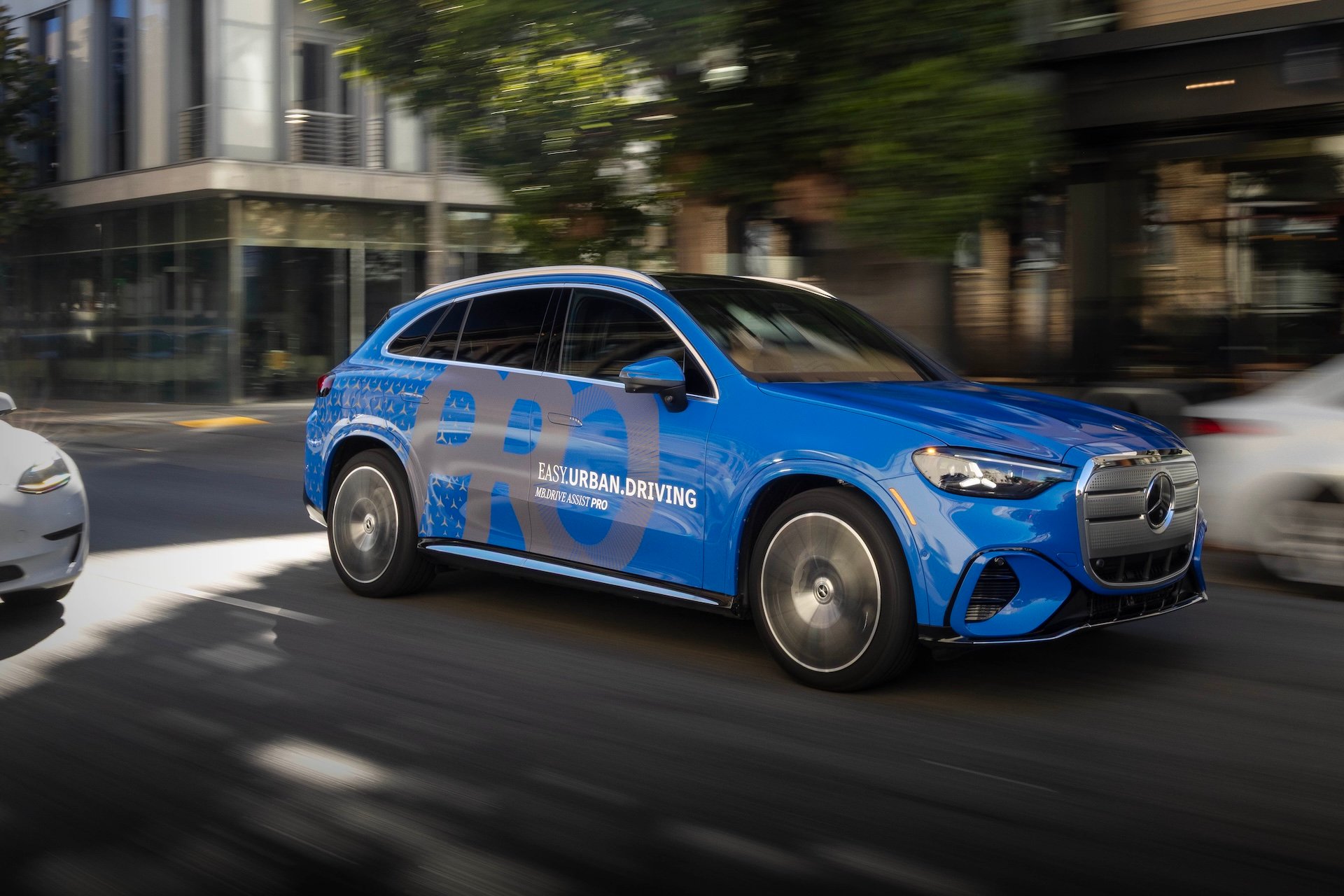
It's not a self-driving Mercedes, but the new point-to-point Level 2 drive assist is mighty close to not having to be involved while behind the wheel. The post Mercedes’ Hands-Free Driving Assist Tackled San Fran’s Steepest Streets, Cyclists, Traffic. Here’s How It Went appeared first on The Drive .
Back in the summer of 2022, I went to Germany to test Mercedes-Benz’s Level 3 hands-free driving system, and it impressed me then. I could read The Drive while the car drove itself down the road, and even play video games from the center touchscreen. However, the tech was heavily regulated for highway operation only and limited to a paltry 37 mph. Fast forward to last week, and I climbed into a U.S. spec 2027 Mercedes GLC 400 Electric to see what the brand’s new point-to-point Level 2 hands-free assist could do in a busy metropolis like San Francisco.
Dubbed MB Drive Assist Pro and Hands-Free Highway Assist, these latest tech offerings from Mercedes allow drivers in California to take their hands off the wheel while navigating urban environments and eligible controlled-access highways. And unlike before, you can do it at speeds up to 85 mph.
You can watch the video below to see how I fared through the busy streets of the Bay Area, including typical big-city treats like double-parked cars, road construction, cyclists, and, of course, lots of pedestrians. Most impressively, however, was the system’s confidence and fluidity in its decisions, always feeling sure of its decisions and movements, which is more I can say for rival systems out there.
MB Drive Assist Pro uses 27 sensing components, including 10 cameras, five radar sensors, and 12 ultrasonic sensors, and a high-performance computer delivering up to 254 Tera Operations Per Second to process the incoming data. As you’ll see in the video, the dual screens (gauge cluster and infotainment) show what the car sees and recognizes.
During my roughly hour-long experience with the point-to-point system, I made my way up and down the city’s iconically steep streets and encountered various scenarios I thought would prompt me to take control of the wheel. Nope. In fact, the only times I had to touch the wheel were because of a built-in safety timer (to make sure you’re still there ), and once because a Model 3 driver decided to turn in front of me to perform what looked like a U-turn at first, but was actually a dive-bomb into my lane to parallel park on my side of the street, which required an illegal three-point turn.
While the in-city portion of the route went smoothly, the highway portion (the Hands-Free Highway Assist side of the system) left a little to be desired. Lane changes took longer than expected, and ironically, the system didn’t feel as confident as it did in the heart of the city, surrounded by a thousand obstacles. For what it’s worth, my “highway experience” was far from that, given that it was rush hour, so it was more like navigating a parking lot at 25-30 mph. Perhaps on the open road, the S-Class could’ve stretched its legs a bit better.
Per Mercedes, certain eligible 2027 models already have the required hardware, including the CLA Electric, GLE, GLS, and S-Class. Later, more 2028 models will include the necessary hardware and software to run the system. Meanwhile, models with the right equipment can be updated over the air, and drivers in California can choose from multi-year, one-year, and monthly subscriptions. Pricing wasn’t released.
Got a tip? Email us at tips@thedrive.com
The post Mercedes’ Hands-Free Driving Assist Tackled San Fran’s Steepest Streets, Cyclists, Traffic. Here’s How It Went appeared first on The Drive .