There’s still ice leftover from the last ice age
Popular Science ·
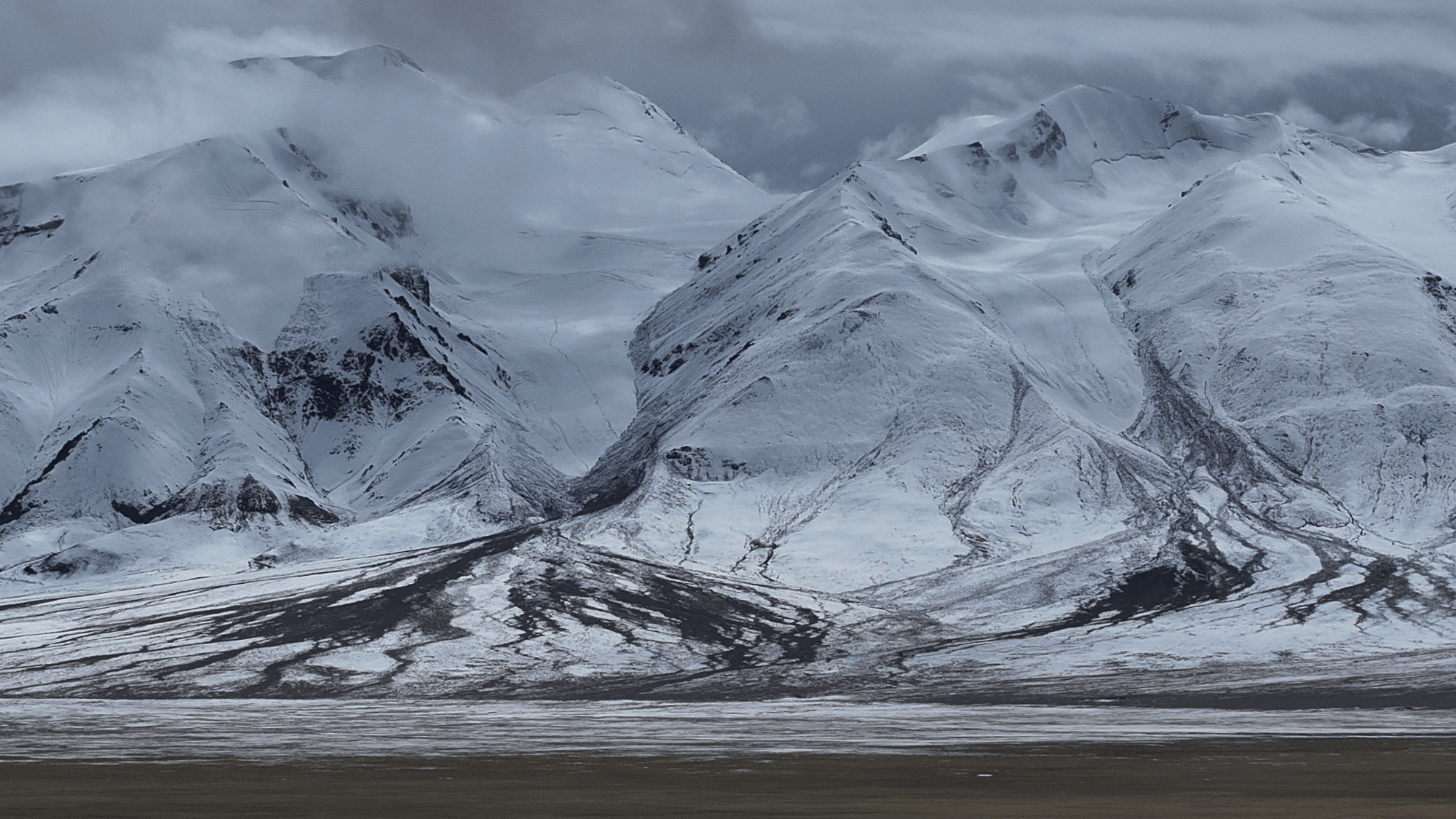
Ice cores from Tibet's Guliya Plateau extend Earth's glacial record by over 100,000 years. The post There’s still ice leftover from the last ice age appeared first on Popular Science .
The last ice age began roughly 120,000 years ago and ended about 11,500 years ago, but plenty of signs of this last period of ice domination still exist all over Earth. The Midwestern United States remains flattened by the last ice age’s towering glaciers, Many new apex predators have replaced woolly mammoths and saber-toothed tigers —and the ecosystem is still recovering from that switch .
Even some of the ice age’s ice itself still exists on planet Earth, locked inside of an ancient ice cap in Northwestern Tibet. A new analysis of ice fragments from this ice cap surrounded by 98-foot-thick ice extends the planet’s glacial record by over 100,000 years. A study published this week in the journal Science Advances details these oldest ice cores ever recovered from the region.
Ice cores are vital climate archives that preserve evidence of past climates within layers of ice like tree rings. They can help scientists understand past climate patterns to better predict what the planet could see in the future..
This new analysis compares ice cores drilled in the Guliya Plateau (about 19,370 to 20,340 feet) above sea level in 1992 and 2015. The team found that both samples have similar oxygen isotope patterns, suggesting that the environmental signals within the ice are consistent and reproducible.
“Reproducibility of the records within a given ice cap is extremely important,” Lonnie Thompson , a study co-author and paleoclimatologist at The Ohio State University, said in a statement. “If you get an identical record a quarter of a century later, it can tell you a lot about the behavior of the ice over time.”
To measure the ice’s true age, the team used advanced dating techniques to detect two radioactive isotopes—beryllium and chlorine. Both of these elements have half-lives that are reliable tools for detecting environmental changes at a large scale. With these elements in hand, the team marked the Laschamp Geomagnetic Excursion . This reversal of Earth’s magnetic field over 41,000 years ago left major chemical traces in the ice.
By comparing these results with oxygen-isotope records from Tibetan cave deposits nearby, the Guliya record’s age may stretch back well over 128,000 years.
“It’s a really critical finding, because outside of the polar regions, this is the only ice core we have from the mountaintops that go back that far,” Thompson said. “Records out of Huascarán only go back over 30,000 years, not over 100,000, so that makes Guliya a very unique record.”
While ice cores provide treasure troves of climate data, understanding and interpreting them can present a challenge. According to Thomson, it requires an accurate knowledge of that specific ice core’s timescale. For instance, earlier studies suggested that Guliya’s record stopped about 12,000 years ago during the Mid-Holocene era. The evidence in this new study doubts that timeline, confirming that some of the ice from this age is even older than the Holocene.
“If we only had Holocene-era ice in Tibet, that would mean that the big ice sheets from the last ice age didn’t persist through the early Holocene,” said Thompson. “But evidence shows that it did.”
Guliya’s topography likely plays a role in how well it can preserve such old paleoclimate records. Its rugged terrain and freezing temperatures can create a more accurate timescale, which provide clues to bigger environmental questions, including when Earth’s intense periods of glaciation began and ended. Further studies of these samples could be used to determine how other key climate and environmental indicators may change now that we have a better window into climates of the past.
“The big picture is that our results tell a very consistent story,” he said. “If you get the science right, it’s consistent. It’s our understanding of what it’s trying to tell us that has to catch up.”
The post There’s still ice leftover from the last ice age appeared first on Popular Science .