No, Hot Wheels Quality Hasn’t Tanked. Social Media Just Wants You to Be Mad
The Drive ·
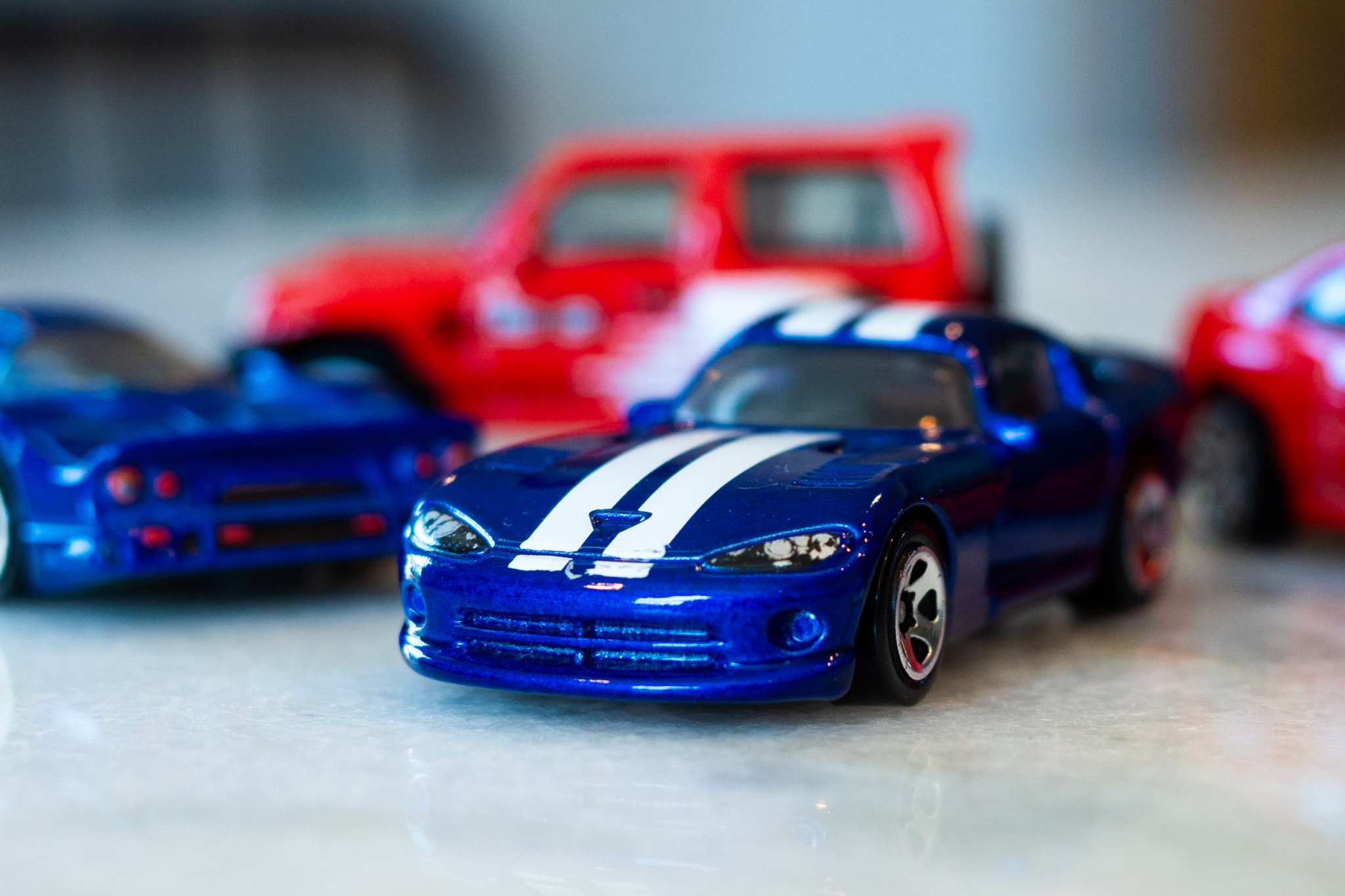
If you've seen a viral post grousing over Hot Wheels cheapening out over the years, it was probably made with AI and designed to piss you off. The post No, Hot Wheels Quality Hasn’t Tanked. Social Media Just Wants You to Be Mad appeared first on The Drive .
Every day, we all see stuff on the internet that doesn’t add up. It’s kind of just a basic part of being alive now. One that caught our attention was a viral post comparing three Hot Wheels die casts—one from 1997, one from 2012, and one from 2026. Through the years, undercarriage detail is reduced, and the idea is that this is analogous to the decline of civilization . You could say it made us shake our collective heads here at the site, though not really in the way whoever started this hoax was probably aiming for.
As usual, posts like this are founded on a grain of truth, extrapolated and artificially altered to make a far more sweeping statement with zero context. For starters, it’s AI generated, which at least the creator in this case didn’t attempt to hide. Even if they had, though, you could tell by the fact that Mattel, even today, doesn’t make Hot Wheels cars with the logo on the underside and absolutely nothing else.
A post shared by Bitofact (@bitofact)
So, off to a great start. But yes, undercarriage detail has lessened over the decades on mainline (those are the cheapest, $1 ones) Hot Wheels cars. I keep a small collection hanging on my wall, and if I look at the oldest mainline in front of me right now—a Dodge Copperhead concept dated 1998—it has chassis and driveline components molded, front to back. It’s also metal underneath.
Looking at the lineup below, we can see the floors change to plastic as we get into the late 2000s, and details progressively simplify through the late 2010s. The Maserati Shamal from 2024 and Dodge Viper GTS from last year are both broadly bald aside from text, though it’s worth pointing out that the 2022-dated Mitsubishi Pajero Evolution does show more complexity toward the front and rear, with particular attention paid to the skid plate and fuel tank.
Why? Probably because those details are still visible when this high-riding SUV is standing on all four wheels—the way it probably is 99% of the time, at least for the vast swaths of adults who have chosen to fume about this. And this gets to the key point here, which is that modern Hot Wheels quality is infinitely better where it counts than it was when I was a kid, 30 years ago.
Aside from that Copperhead, I don’t actually keep any mainlines that are as old in my little collection because they generally look terrible. They always looked terrible. That’s the reason I have that new Viper casting—the old RT/10 was a caricature of itself, and not even a cool looking one. The same is true comparing the new Ferrari F50 Mattel just released with its predecessors , or the Porsche 959’s more recent do-over.
I don’t work at Mattel, so I can’t speak to whether this is a matter of modern casting tech getting more intricate, better reference materials, or what. Whatever the reason, the proportions and precision of current HW mainline bodies wipe the floor with those of two or three decades ago. And they’re still made of metal.
Personally, I’d rather Mattel spend more resources on making the top of the car look good versus the bottom, that never gets any sun on the shelf anyway. That brings us to something else the boomer baiters tend to leave out, which is that HW mainlines generally cost $1.30 today. According to this Reddit post of a 1982 toy , 44 years ago they were more like 93 cents. If Mattel kept up with inflation, Hot Wheels would cost $3.25 now.
This is a toy that has been remarkably inflation resistant, and the aspects of it that actually matter have improved over time. But if all this still gets under your skin, it’s worth knowing that Mattel makes more expensive Hot Wheels that look even better and have retained their metal-cast undercarriages with visible components.
Some flaunt it more than others, as the pic above shows, but that also depends on the car. If the real Mercedes CLK-GTR didn’t have a flat floor, it probably wouldn’t have won the 1997 FIA GT Championship. The Car Culture casting of the 300 SEL 6.8 AMG “Red Pig” next to it, on the other hand, has all the mechanical definition you could ask for, and it’s shiny.
That’s what’s really going on with Hot Wheels quality through the ages. It doesn’t neatly fold into an agenda to make you lament the loss of a world that you probably didn’t even like that much when you were living in it. But if you still need a hit of nostalgia—and we all do from time to time—I recommend seeking out a local die cast convention or swap meet. Emptying your wallet once you get there is optional.
Got a news tip? Reach out to tips@thedrive.com
The post No, Hot Wheels Quality Hasn’t Tanked. Social Media Just Wants You to Be Mad appeared first on The Drive .